Vip access

 Favourites


















December 2025
Boulle & His 19th Century Followers

The Art of Boulle Work:
Distinguishing 17th-Century Masterpieces from 19th-Century Revivalism
When it comes to the world of antique furniture, few names carry the same level of prestige and craftsmanship as that of André-Charles Boulle, the renowned 17th-century Parisian ébéniste (cabinetmaker) whose virtuosic marquetry techniques elevated the art of furniture-making to new heights. Boulle's masterful creations, characterized by their intricate brass and tortoiseshell inlays, have long been the holy grail for discerning collectors and curators alike.
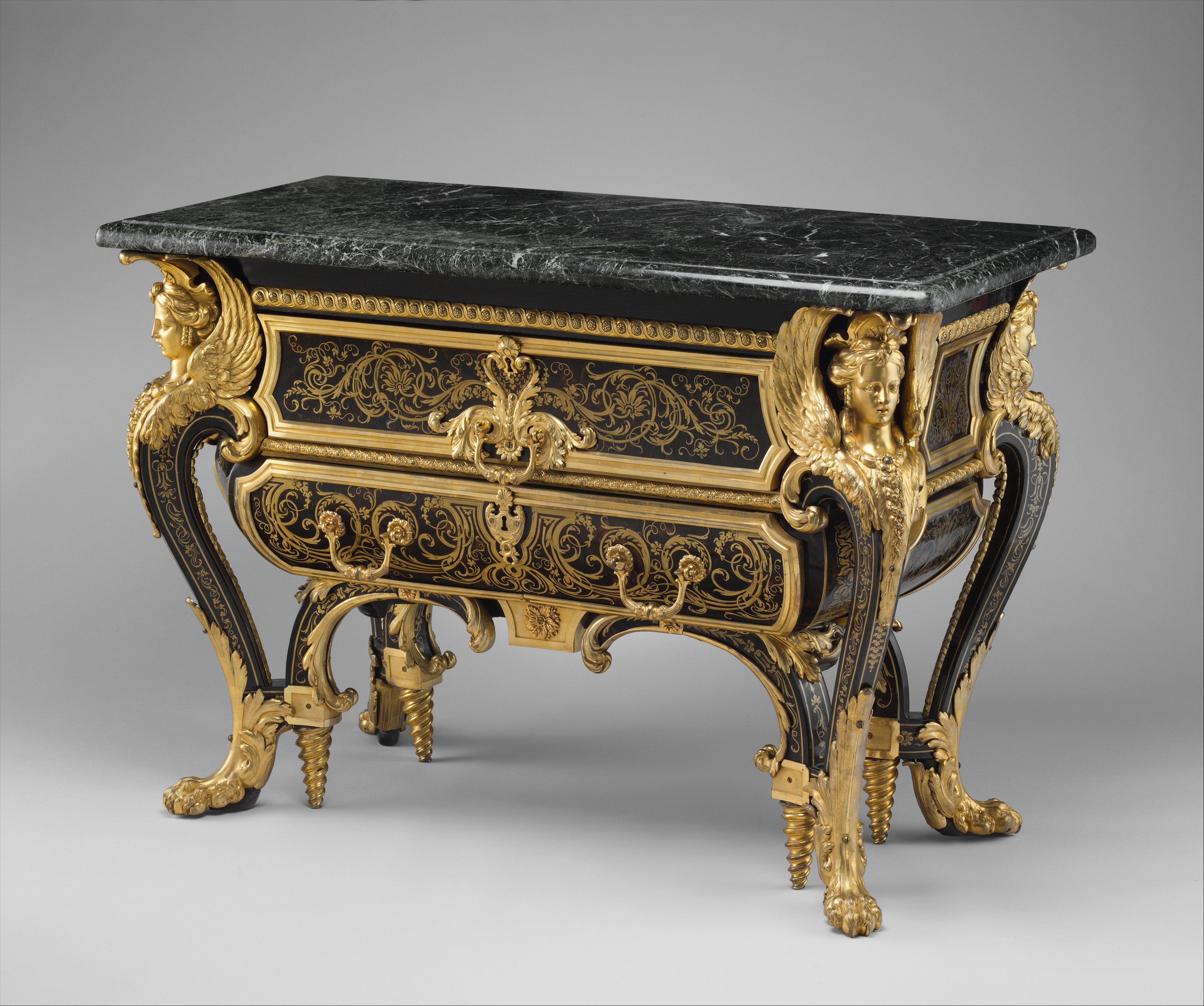 Commode by André-Charles Boulle, french, circa 1710–20. Accession no. 1982.60.82. The Metropolitan Museum of Art, New York.
Perhaps unsurprisingly, the enduring popularity of Boulle's designs has also given rise to a proliferation of 19th-century revival pieces, many of which were produced with impressive technical precision despite not claiming the novelty or provenance of the originals. For the seasoned antique enthusiast or the novice collector, distinguishing these 17th-century masterpieces from their 19th-century renditions can be a daunting task, requiring a keen eye for detail and an in-depth understanding of the evolving techniques and materials employed in Boulle's workshop and beyond.
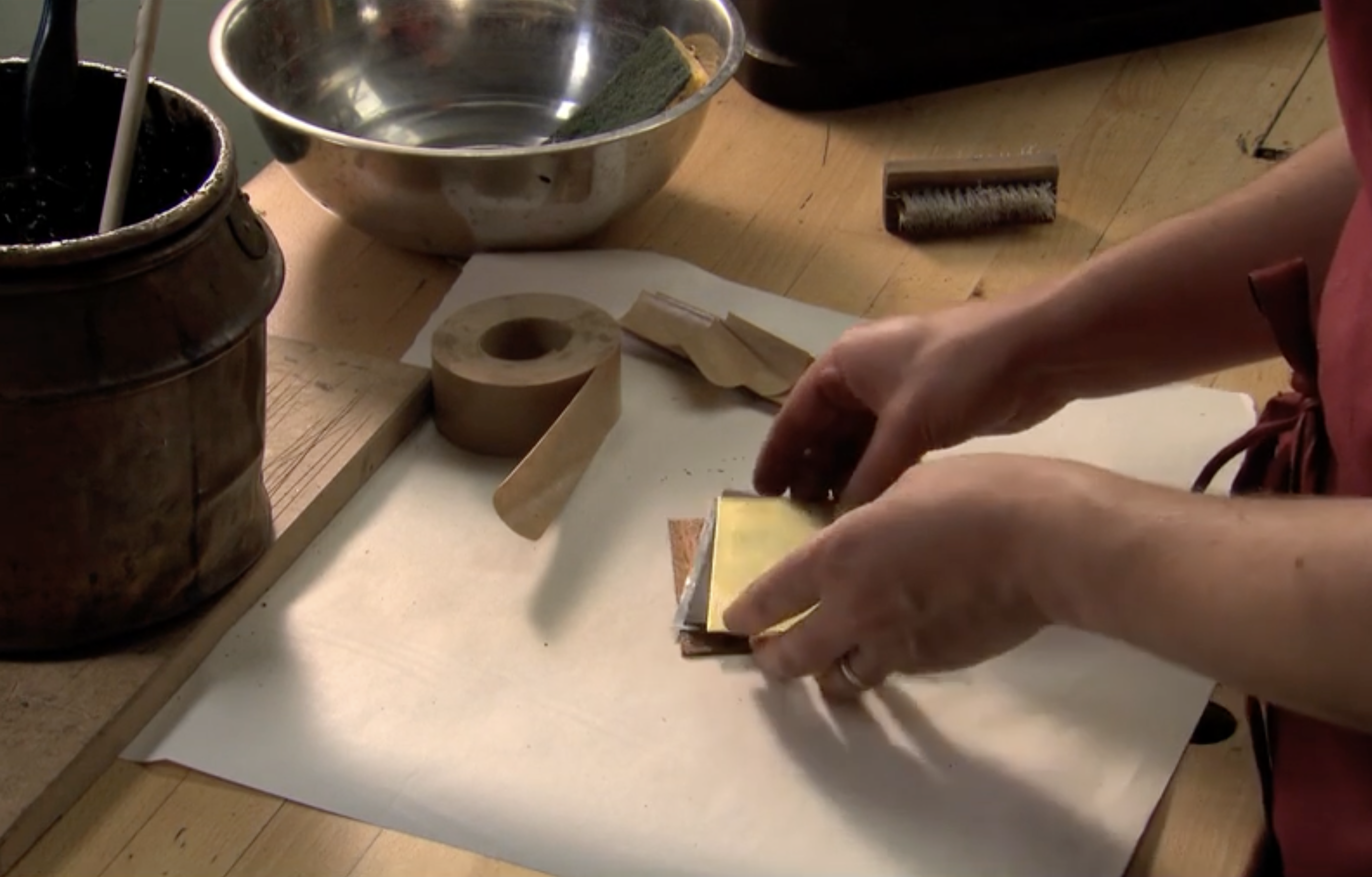
A “packet” consisting of wood, pewter, horn and brass, being prepared for marquetry cutting.
The Fundamental Technique: Tarsia a Incastro
The genius of Boulle marquetry lies in the "packet" or "stack" cutting method, known as tarsia a incastro. This ingenious process allowed for the simultaneous creation of two distinct decorative panels from a single cutting session. The ébéniste would begin by gluing together two sheets of material of equal thickness—traditionally tortoiseshell and brass—often with a piece of paper in between to facilitate separation later. A design was then pasted onto the top surface, and using a fretsaw (a fine bow saw), the artisan would cut through both layers simultaneously, following the intricate design lines.
Once cut, the stack was separated, resulting in two sets of identical components: a brass background with a tortoiseshell cutout, and a tortoiseshell background with a brass cutout. This process, known as the première partie and contre-partie, respectively, is a critical distinction for evaluating 17th-century Boulle masterpieces versus their 19th-century revivals. Historically, the première partie, with its luminous tortoiseshell background, was considered the more desirable and valuable of the two, often used for the primary face of a cabinet, while the contre-partie was relegated to the sides or companion pieces. Pairs exhibiting both types of Boulle marquetry are especially rare and sought after.
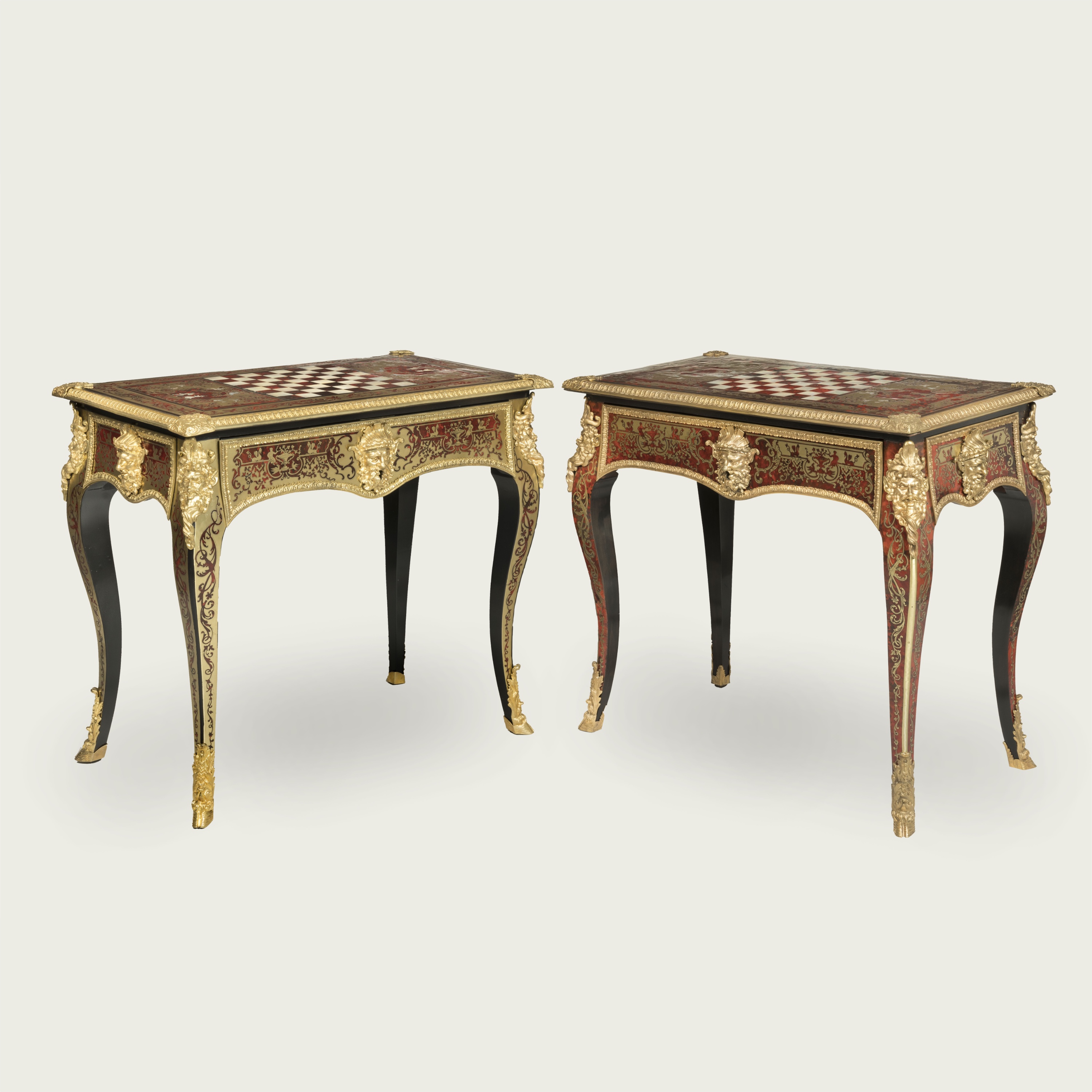
A Fine Pair of Games Tables of the George IV Period in the Manner of André-Charles Boulle, Attributed to Thomas Parker (active 1805-1830), with Butchoff Antiques.
Evolution of the Cut: 17th vs. 19th Century
One of the most reliable ways to date Boulle work lies in the physical evidence of the saw's passage. In the 17th-century masterpieces produced during the reign of Louis XIV, the hand-forged saw blades used were significantly thicker, resulting in a wider "kerf" (the gap between the metal and the shell). Artisans would then fill this wide gap with a mixture of hot hide glue and lampblack or charcoal, creating a distinct black outline that added contrast and "pop" to the design. This mastic filling was not merely functional but became an integral part of the aesthetic, creating the distinctive dark borders that frame each brass element.
The blade angle also provides crucial evidence. Early 17th-century cutting was predominantly vertical or showed variable angles that were largely accidental, necessitating heavy mastic filling to achieve a smooth surface. The tendrils of vines in Boulle's original workshop pieces exhibit a fluidity of line and an artistic "nervousness" in the scrolling foliage that mechanical reproduction simply cannot replicate.
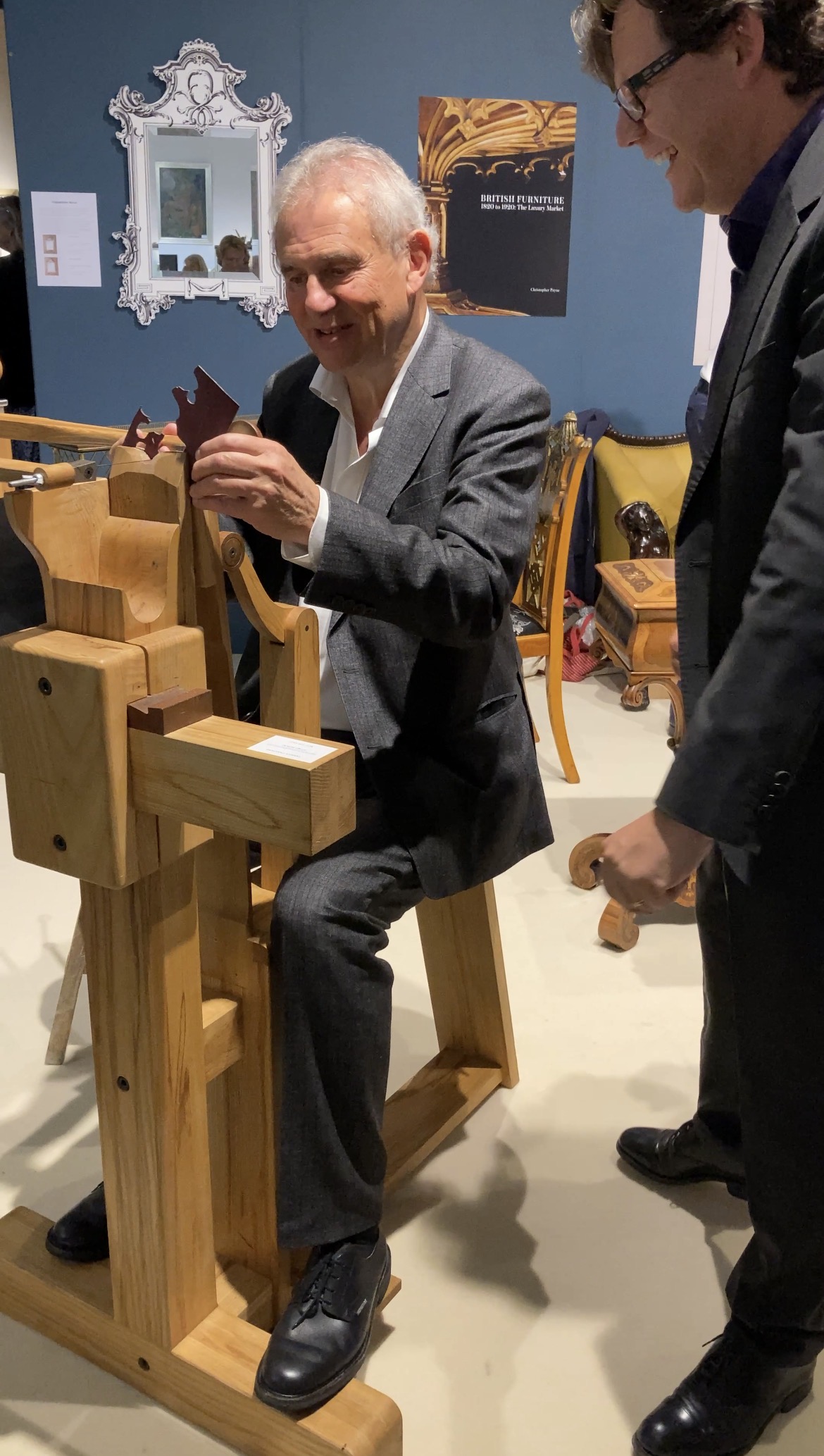
Ian Butchoff practicing the art of traditional marquetry cutting under the guidance of Yannick Chastang, at the LAPADA fair in Berkeley Square, London.
In contrast, the 19th-century revival pieces, produced during the Louis-Philippe and Napoleon III eras, utilized industrially manufactured steel blades that were much finer and more uniform, resulting in an incredibly tight, sometimes seamless fit between the metal and shell. The revivalist marqueteurs often employed conical cutting techniques, where the blade was angled slightly as it passed through the materials, creating a bevelled edge that allowed the pieces to push together almost seamlessly, much like a conical plug fitting into a hole. With little to no filler needed, these 19th-century works often exhibit a more mechanically perfect appearance. These ingenious craftsmen and innovators pushed the technique to entirely new limits.
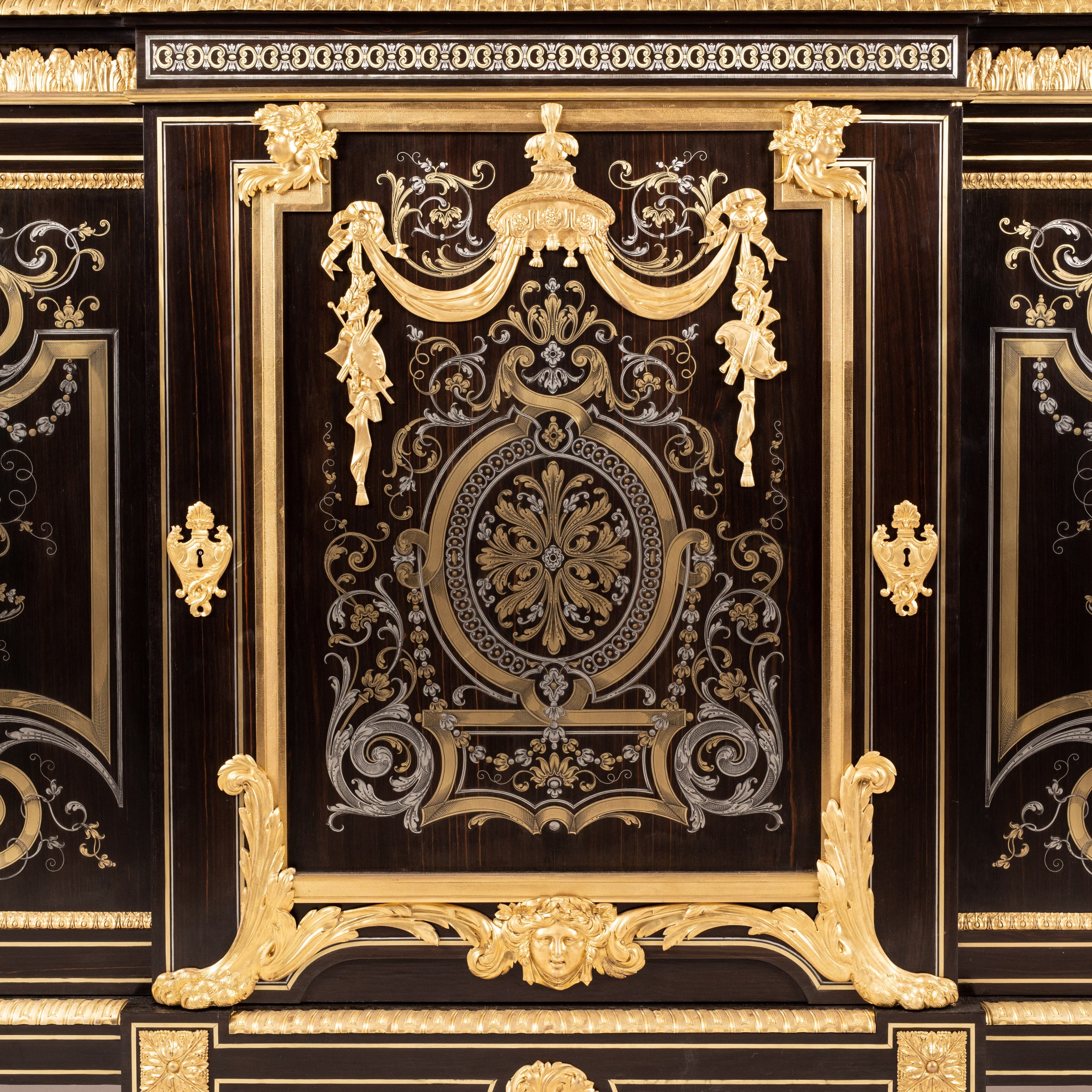
Near perfect. The brass and pewter designs have been cut with extreme precision on this 19th century cabinet. As a true show of skill, the marquetry has been set in ebony, an extremely dense and hard wood, as opposed to soft and pliable turtleshell. With Butchoff Antiques.
Carcass Construction and Secondary Woods
Beneath the opulent surface of Boulle furniture, the structural "bones" of the piece can provide invaluable clues to its origins. One of the most immediate tactile tests is the overall weight of the furniture, which can differentiate the heavy, solid oak substrates of the 17th century from the lighter, often machine-cut veneers and softwood carcasses used in 19th-century reproductions. A genuine 17th-century piece will possess a substantial heft that speaks to its architectural construction.
In the workshops of André-Charles Boulle and his contemporaries, the carcass was built with architectural solidity, using quarter-sawn French oak to maximize stability and minimize warping—a crucial consideration when applying the rigid brass and tortoiseshell veneers. Quarter-sawing produces a grain pattern that is vertically aligned, creating the most stable possible foundation. To create a smooth surface for the marquetry, the coarse grain was often filled, or the wood was "toothed" using a toothing plane to increase glue adhesion.
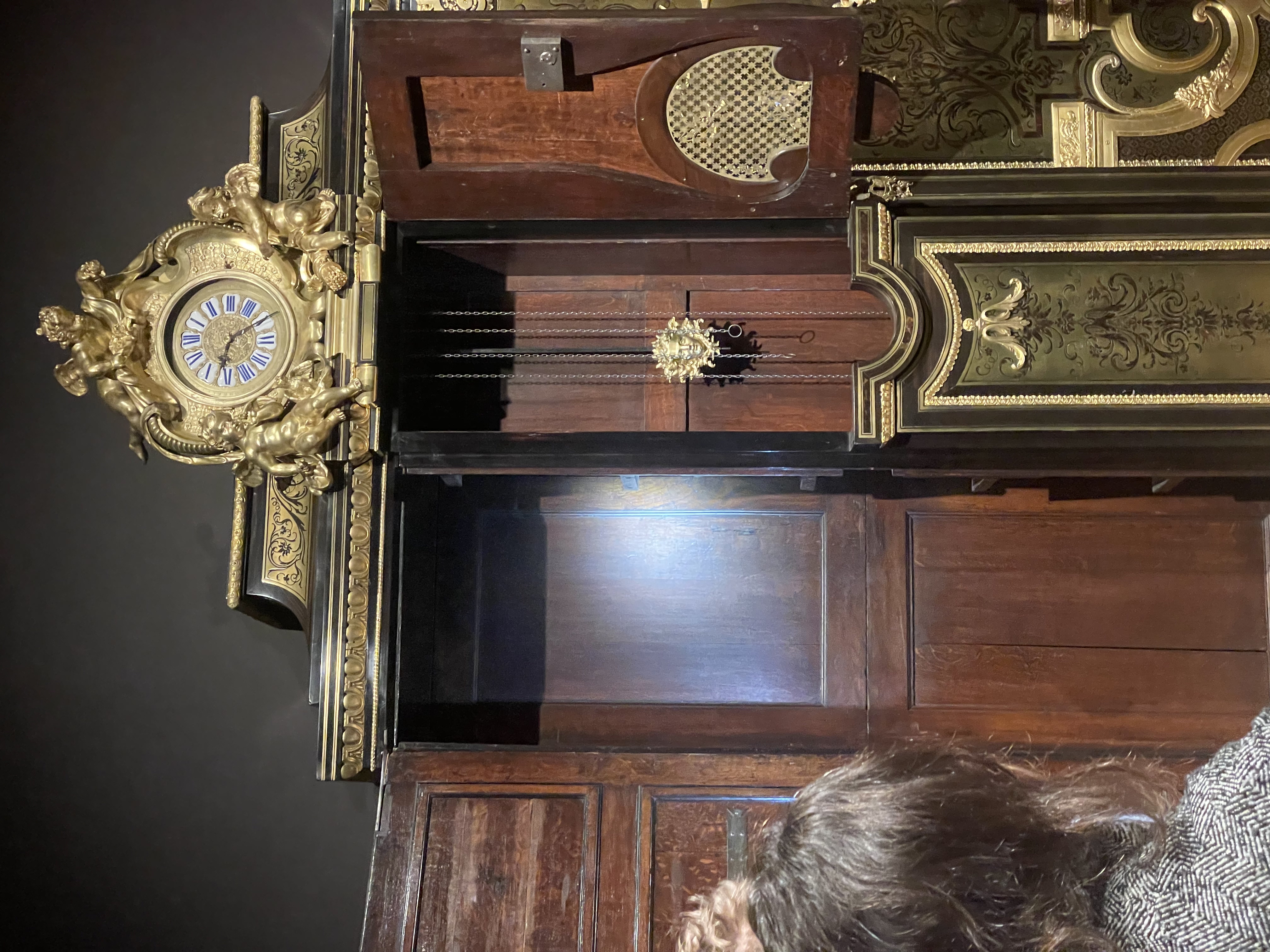
A rare glimpse inside an original Boulle armoire, circa 1715, showing the solid oak paneled construction, today at the Wallace Collection (F429). Photograph by Rainier Schraepen.
The exposed areas, such as the backboards, drawer bottoms, and undersides, will often exhibit the deep, warm brown or grey-black hues of aged oak that has oxidized over three centuries. Backboards were frequently split (riven) rather than sawn, showing an uneven, natural texture. Where saw marks are visible on hidden surfaces, they appear as straight, irregular lines from manual pitsaws or handsaws.
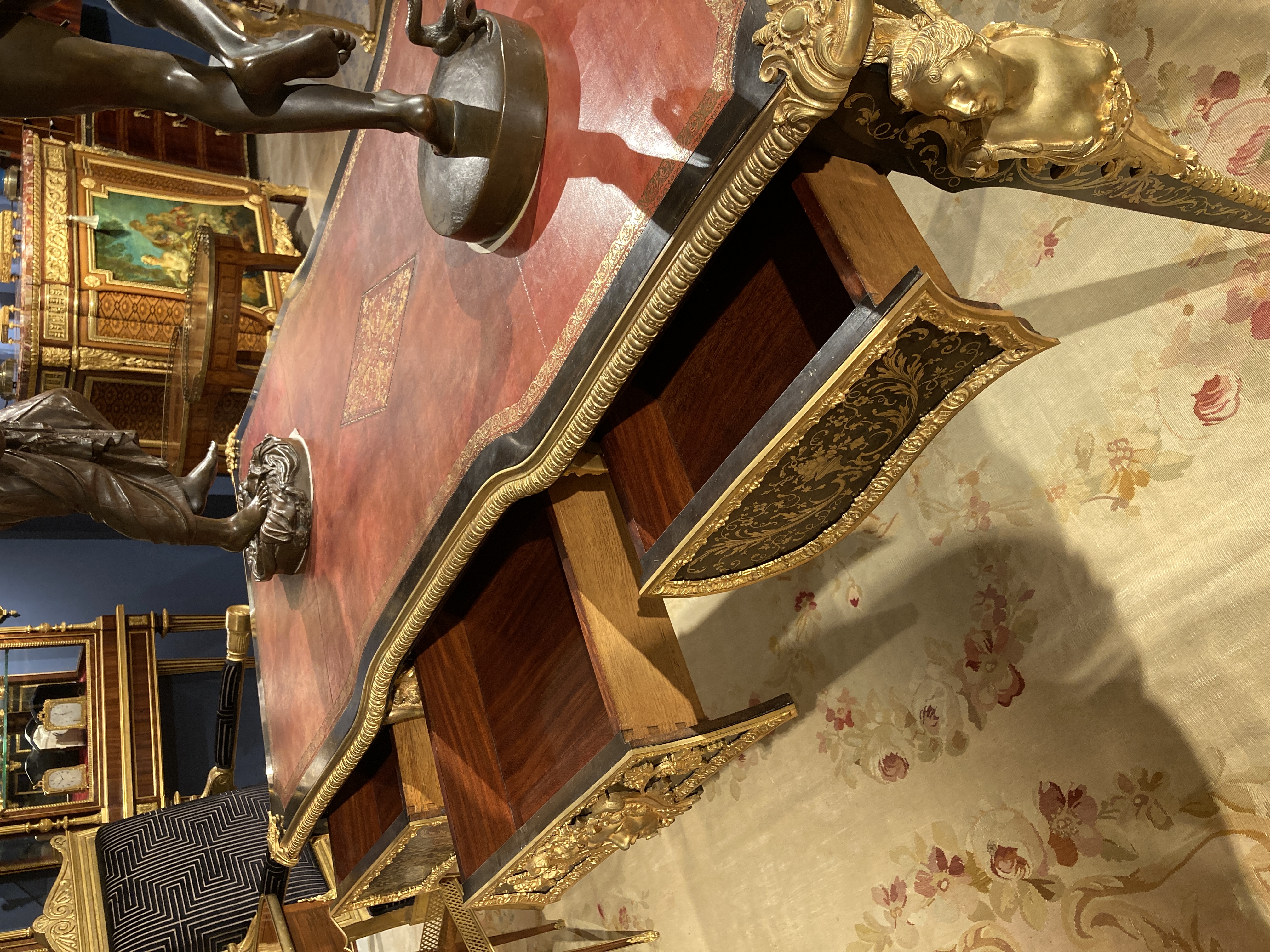
A very refined and successful Boulle revival bureau plat (writing table) by Benjamin Gros, circa 1870, showing the mahogany-lined drawers. Gros was among the top cabinetmakers active in Paris around the mid-19th century, working with other great makers such as Charles Guillaume Winckelsen. With Butchoff Antiques.
Conversely, 19th-century revivalist ébénistes had access to industrial timber yards and different imported woods, including solid mahogany for drawer linings (a relative luxury in the 17th century) and softwoods like pine or poplar for the carcase. A particularly deceptive practice involved constructing the carcase from inexpensive pine, then veneering the visible interior parts with thin sheets of oak to mimic 17th-century solid construction, though this is rarely seen on Parisian furniture. These later pieces may also feature tell-tale signs of machine processing, such as uniform board thickness and the distinctive arc-shaped scratches of circular saw marks—technology that did not exist in Boulle's time.
Metallurgy and Mounts: Mercury Gilding vs. Electroplating
The bronze mounts, or ormolu, that adorn Boulle furniture serve not only as decorative elements but also as protective "jewelry" framing the marquetry. Distinguishing the metallurgical techniques used in the 17th and 19th centuries is often the single most reliable way to authenticate a piece, as the chemical signature of the gold application is difficult to replicate or fake.
During the reign of Louis XIV, the exclusive method employed was mercury gilding, also known as "fire gilding." This process involved mixing ground gold with liquid mercury to create a paste (amalgam), which was then applied to the cast bronze mounts. The mounts were subsequently heated in a fire, causing the mercury to evaporate—a highly toxic process that was eventually banned—leaving a fused layer of gold with a rich, warm yellow tone and a substantial, "buttery" luster. The gold layer is notably thick, filling the microscopic pores of the bronze and creating a depth that cannot be achieved through modern methods. Under magnification, mercury gilding sometimes exhibits tiny pinholes or a slightly pitted texture caused by escaping mercury vapour bubbles.
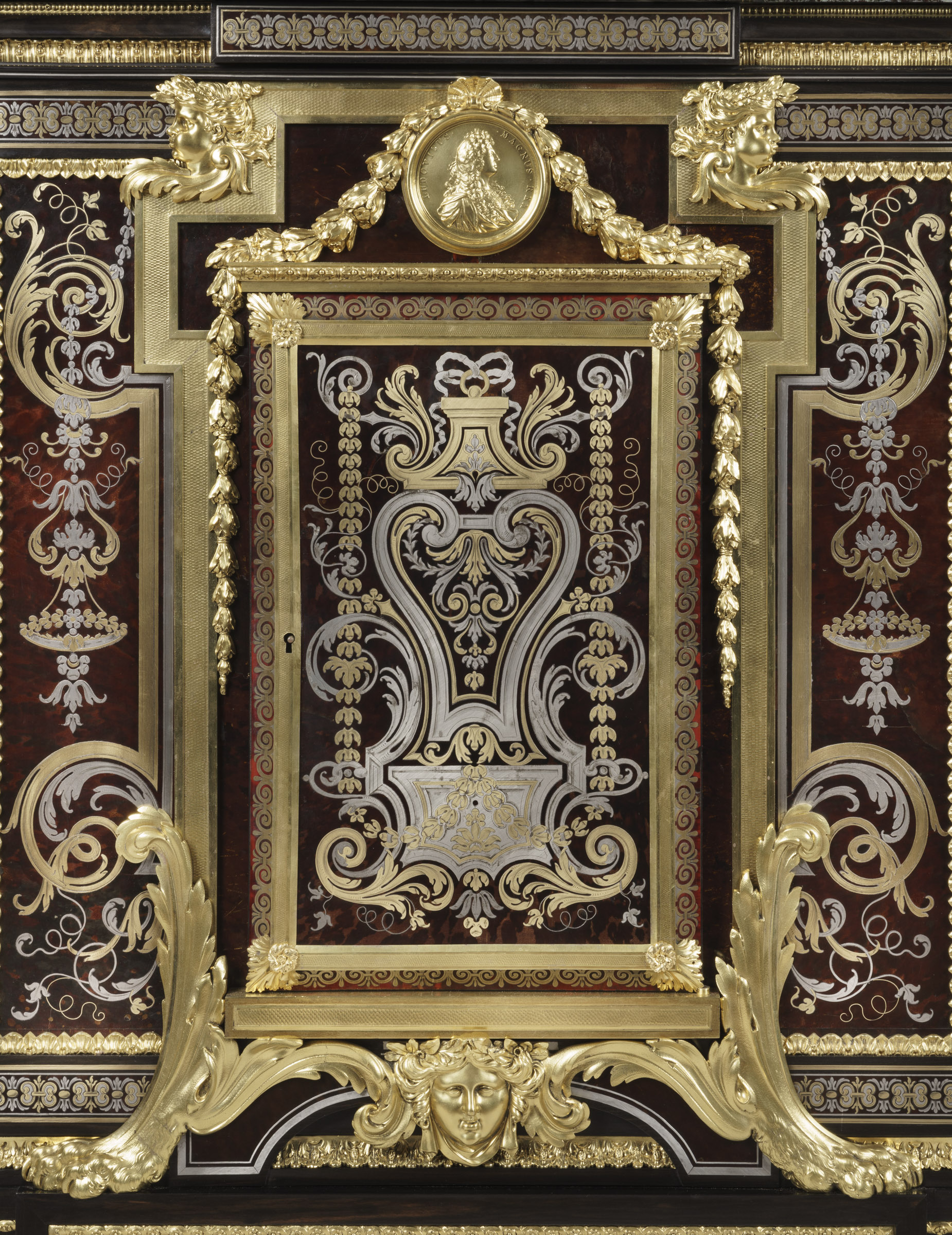
A pioneer of revival French furniture, Charles Guillaume Winckelsen is widely considered one of the most accomplished cabinetmakers of the 19th century. His extremely limited output is justified by the perfection evident in each of his pieces, as seen on this cabinet, sold by Butchoff Antiques. The mounts are mercury gilded using traditional techniques, and retain their original colour and lustre.
The durability of mercury gilding is extraordinary. Even after 300 years, genuine 17th-century mounts often retain their brilliance without tarnishing. On authentic antiques, one will observe characteristic "high-point wear," where the gold has worn away on the noses of masks or the tips of acanthus leaves, revealing the darker oxidized bronze underneath, whilst the crevices retain bright gold.
In contrast, the 19th-century revival pieces often utilized electroplating, invented in the late 1830s and popularized by Christofle by the mid-19th century. This method involves suspending the bronze mount in an electrolyte solution containing dissolved gold, then passing an electric current through it to deposit a thin, uniform layer of gold. While visually similar, the gold layer is typically thinner and less integrated with the underlying bronze, resulting in a colder, more uniform appearance that can seem flat or glassy. The coating lacks the soft, satiny depth of fire gilding and is more prone to being rubbed off or pitted by environmental corrosion. The top makers in Paris continued the process of mercury gilding well into the 20th century, despite posing a serious risk to the health & safety of the craftsmen. According to an article in Connaissance des Arts from 1956, the firm of Samson was still proudly producing mercury gilded ormolu mounts using traditional techniques for their porcelain vases and creations.
Material Sourcing: Tortoiseshell, Brass, and Pewter
The raw materials used in Boulle's workshop were not only of the highest quality but also carefully sourced and prepared. True Boulle work utilizes the scutes (scales) of the Hawksbill sea turtle, a thermoplastic material that can be moulded when heated. The iconic deep red background associated with Boulle furniture was achieved through a specific technique: the ébéniste painted the reverse side of the naturally translucent yellow-brown shell with a mixture of animal glue and vermilion (cinnabar) pigment before adhering it to the wood.
Over three centuries, the organic glues degrade and the vermilion oxidizes, causing the colour to mature into a deep, dark "clotted blood" red or rich aubergine—rarely remaining bright. In contrast, 19th-century revivalist makers employed chemically synthesized pigments, including early aniline dyes or refined vermilion, with more stable binders. Consequently, revival pieces often display a jarringly bright, vibrant "fire engine" red that lacks the mellow richness of earlier pieces. Ironically, the revival pieces best represent what colours the original Boulle furniture may have had.
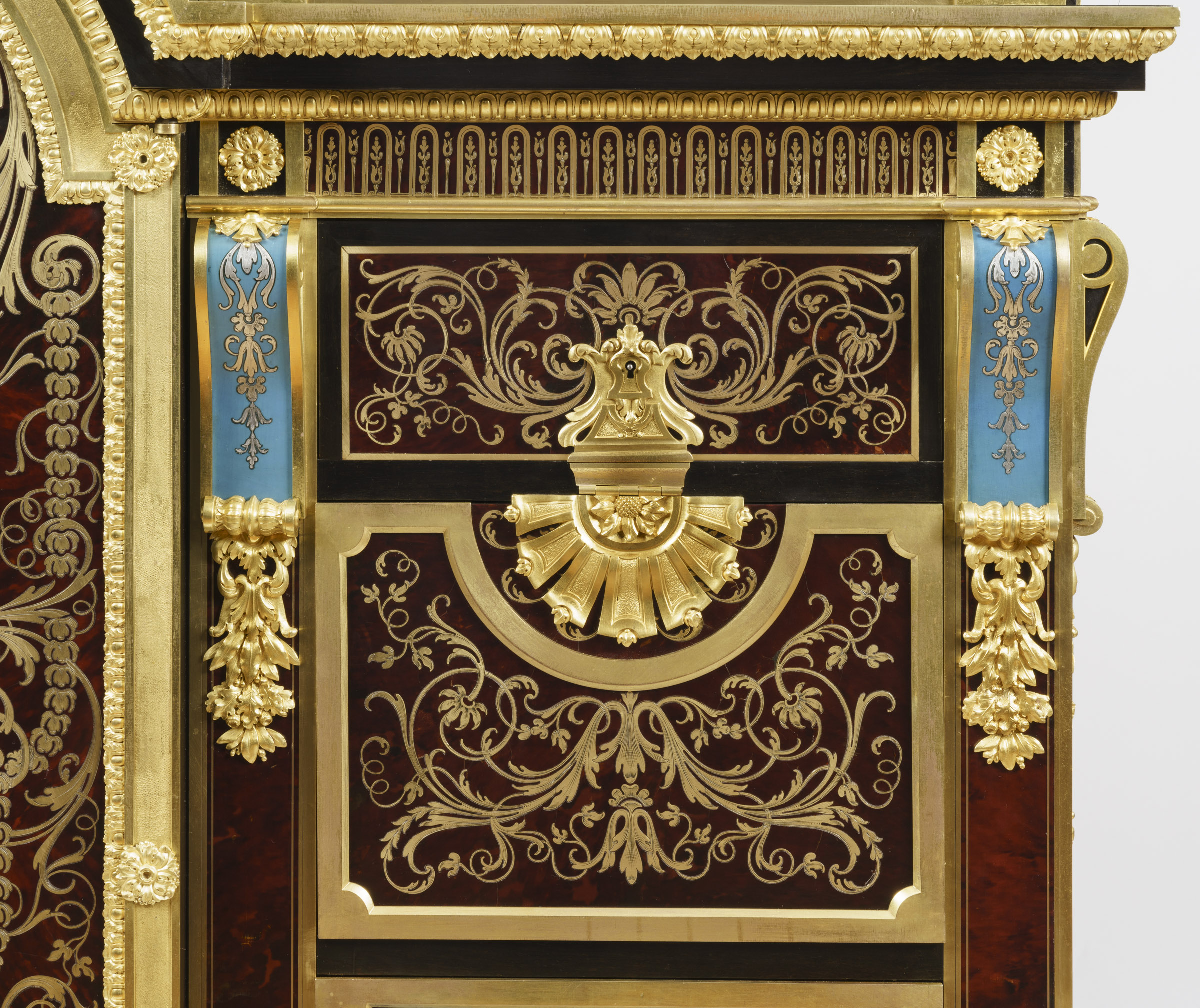
Another masterpiece by Charles Guillaume Winckelsen, dated 1869, showing areas of blue-stained horn as well as red-dyed turtleshell. Revival cabinets such as this allow a glimpse into a more distant past, when Boulle himself was desiging furniture with the same colour palette and motifs in mind for the French Royal Court. Previously with Butchoff Antiques.
The brass provides further evidence of authenticity. In the 17th century, brass was often produced by the "battery" method (hammering) or through early, imperfect rolling mills. It contains trace impurities of zinc and lead that give it a specific colour—often a paler, lemon-yellow gold. The gauge was notably thicker and the metal stiffer. When the glue fails on 17th-century pieces, this thick brass tends to lift in strong, rigid curves.
Industrial 19th-century brass was produced by high-precision rolling mills, resulting in perfectly uniform thickness and chemically purer composition. The colour is often a harsher, more coppery or orange-yellow. Being thinner and softer, when 19th-century brass lifts, it often stays flatter or curls more gently than its baroque predecessor.
Stylistic Integrity vs. Pastiche
While the technical mastery of 19th-century Boulle revival pieces is often impressive, the true connoisseur can discern subtle differences in the overall design and proportions that distinguish them from the architectural symmetry and strict adherence to the Louis XIV aesthetic found in the 17th-century masterpieces. André-Charles Boulle did not simply make furniture; he created architecture in miniature, defined by Baroque principles of symmetry, weight, and hierarchy.
Genuine 17th-century pieces are rigorously symmetrical, constructed with distinct architectural components: a plinth (base), pilasters (columns), capitals, and an entablature (cornice). The aesthetic is heavy, imposing, and severe, designed for the vast, high-ceilinged galleries of Versailles. The legs are typically straight, tapering square pillars (gaine-shaped) or massive scrolls, conveying immense weight-bearing capacity. Masters of the era understood negative space, often leaving areas of plain black ebony to allow the eye to rest and to frame the marquetry panels.
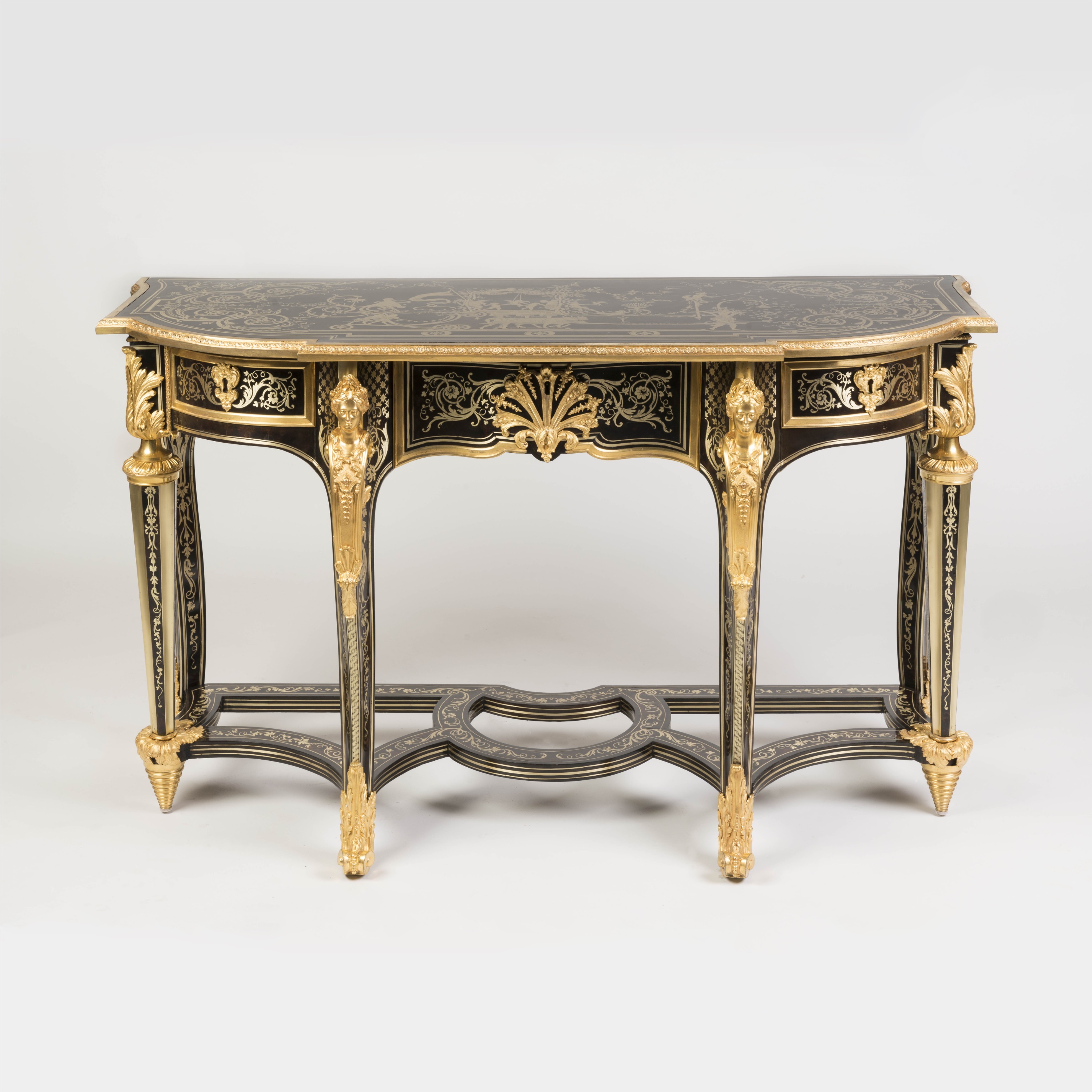
This table, with Butchoff Antiques, is inspired by a group of well-documented consoles made by André-Charles Boulle around 1705. There are three groups, many of which have preserved their marquetry tops of the same design as that on the present nineteenth century piece.
The ébénistes of the 19th century, driven by a desire to appeal to evolving market tastes and the eclectic sensibilities of the Second Empire, sometimes "improved" or hybridized the original designs. A definitive sign of revival work is the blending of Louis XIV materials with Louis XV Rococo curves. If one encounters a piece with characteristic Boulle brass and tortoiseshell marquetry but mounted on curvy cabriole legs—the S-shaped leg typical of the mid-18th century—it is almost certainly a 19th-century creation. André-Charles Boulle largely predated the full Rococo style and did not employ such forms on his grand case pieces.
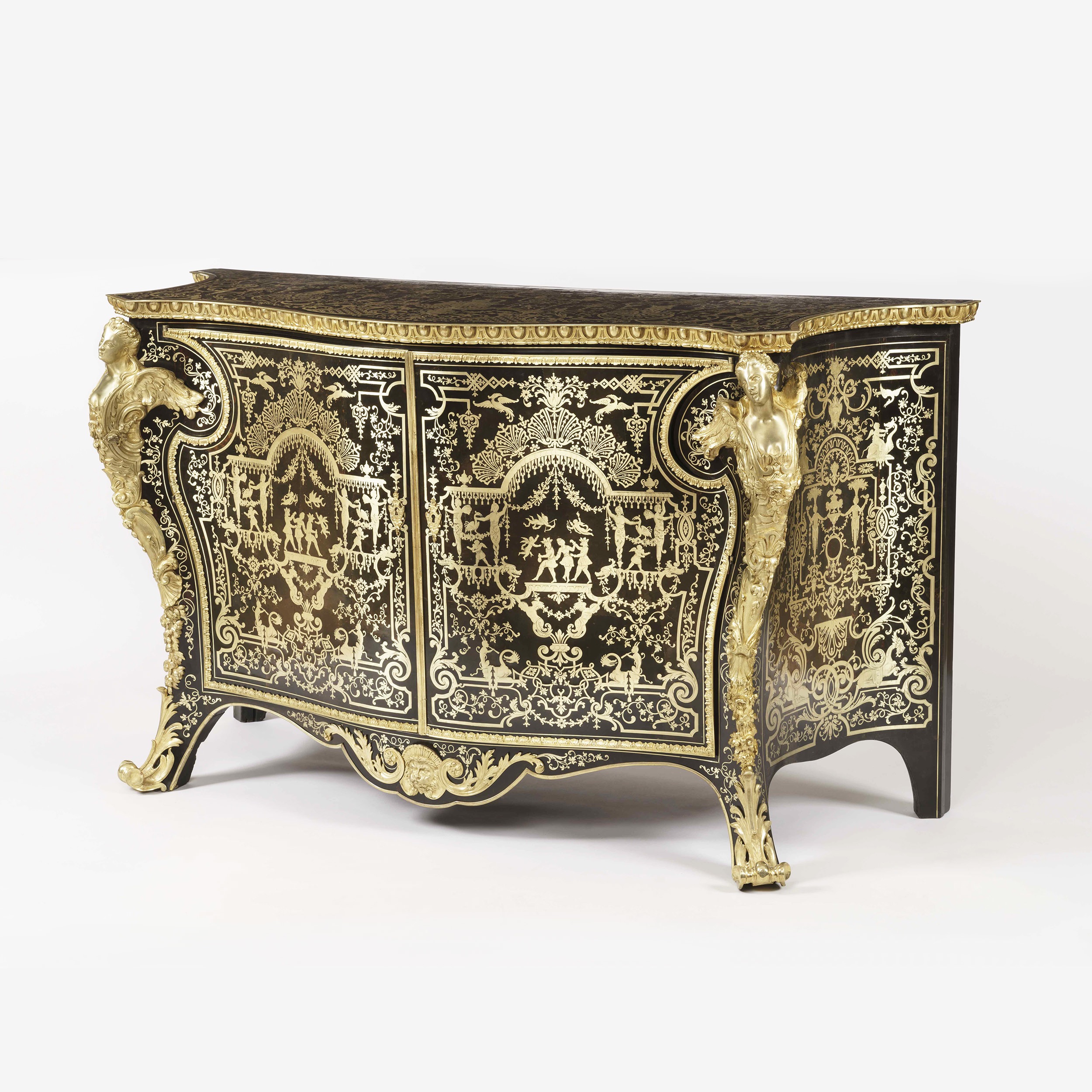
An incredibly rare commode by Charles Mellier. French born, Mellier moved to England, worked for, and eventually took over the illustrious Anglo-French cabinet makers Monbro and Company, circa 1870. The form of the commode is Louis XV inspired by Pierre Langlois, while the surface ornament is taken from earlier Boulle designs. Previously with Butchoff Antiques.
Furthermore, 19th-century makers often exhibited "horror vacui" (fear of empty space), feeling compelled to cover every square inch with decoration. If the marquetry pattern crawls relentlessly over every moulding, leg, and side panel without respite, it suggests the industrial exuberance of Victorian taste rather than the disciplined grandeur of the Sun King's court.
Attribution and Marks: The Stamps of the Revivalists
One of the most definitive ways to identify the origin of a piece of Boulle furniture is through the presence (or absence) of maker's marks and stamps. Interestingly, a signature or stamp often serves as evidence that a piece is not from the 17th century—a paradox that confuses many collectors. If one searches for the stamp "BOULLE" expecting confirmation of André-Charles Boulle's authorship, disappointment awaits.
Boulle held the title of Premier ébéniste du Roi and was granted lodging in the Louvre Palace. This royal privilege exempted him from the strict controls of the Paris Guild of Joiners and Cabinetmakers. The regulation requiring furniture makers to stamp their work with their name and the JME mark (Jurande des Menuisiers-Ébénistes) was not rigorously enforced until 1743–1751, well after Boulle's death in 1732. Therefore, a genuine Louis XIV piece from the Boulle workshop is almost never stamped. Attribution must be made through archival documentation, provenance, and quality of execution.
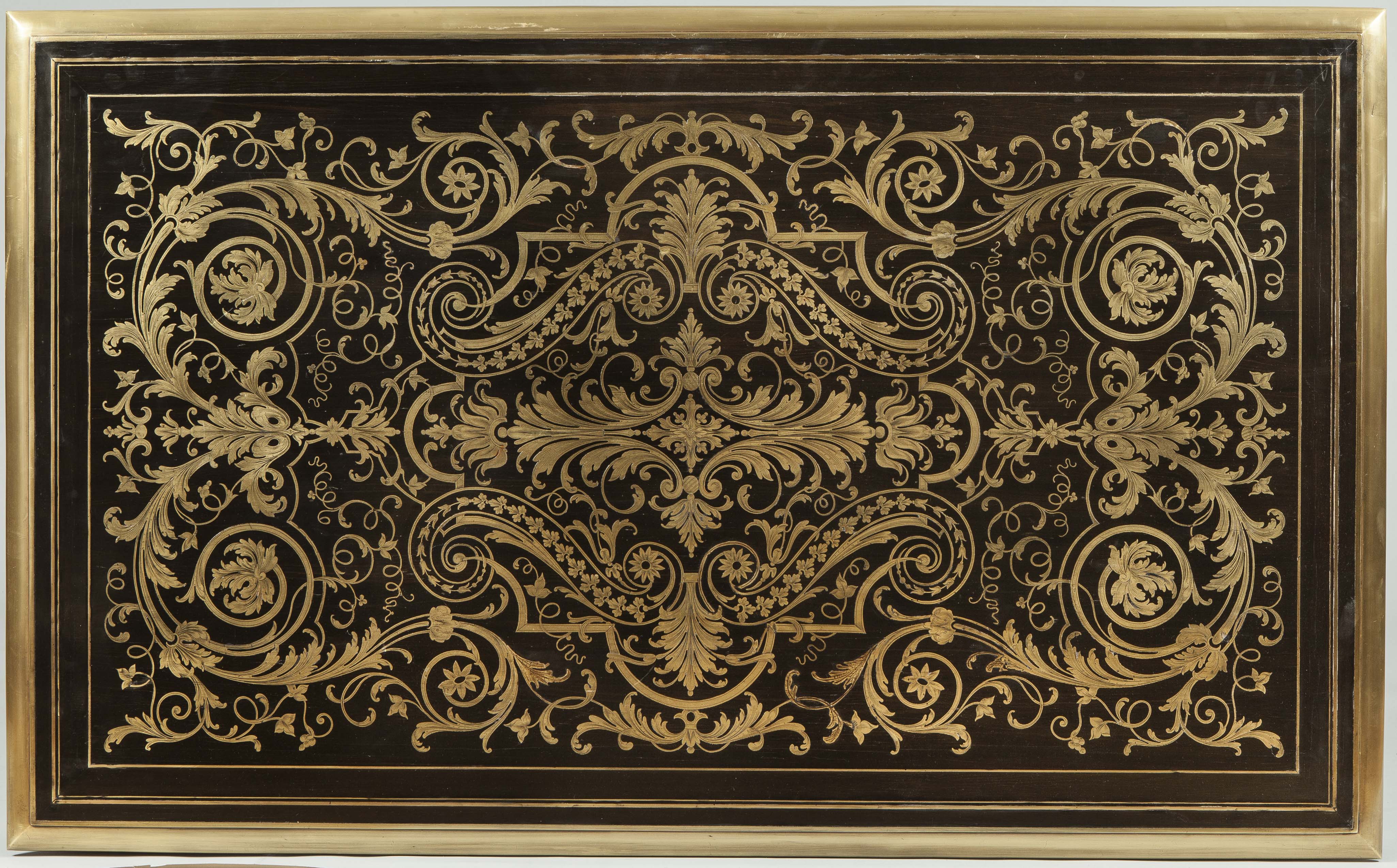
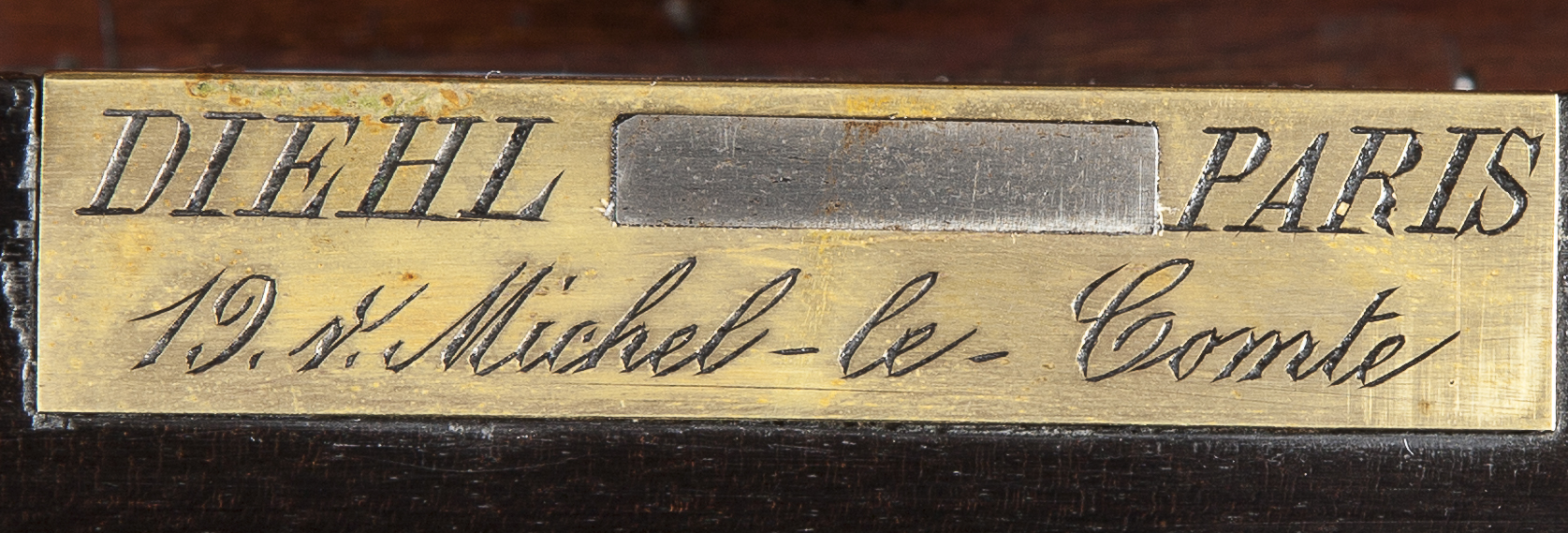
The top of a centre table, circa 1860, with brass marquetry inlaid in wood. Detail of the cabinetmaker's stamp, Charles-Guillaume Diehl. With Butchoff Antiques.
In contrast, the 19th-century revivalist ébénistes often proudly displayed their marks, with pieces bearing the stamps of renowned makers such as Befort Jeune (the most prolific Boulle specialist), Mathieu Befort, Henry Dasson (who often dated his works, solving the mystery immediately), or Wassmus. These stamps, typically found on the top of the carcase beneath marble tops, on lock faces, or on backboards, can serve as clear indicators that a work is a product of 19th-century revival. Much Boulle furniture was also imported to or made in England, where retailers like Edwards & Roberts or Town & Emanuel stamped their names on pieces they restored or sold, effectively branding them as 19th-century.
Conclusion
As the demand for Boulle's exquisite creations continues to captivate collectors worldwide, the ability to distinguish 17th-century masterpieces from their 19th-century counterparts has become an essential skill for anyone serious about acquiring these magnificent works. The differences extend far beyond mere aesthetics, encompassing materials science, manufacturing technology, artistic philosophy, and historical context. By examining the physical evidence of saw kerfs, the weight and composition of carcases, the metallurgy of gilt bronze mounts, and the chemical ageing of tortoiseshell and vermilion, one can build a compelling case for authenticity. Recent scientific research in the field of metallurgy, particularly by Yannick Chastang who uses XRF (x-ray fluorescence) to analyze the composition of metal mounts, is increasingly taking on an important role in authenticating 17th & 18th century pieces.
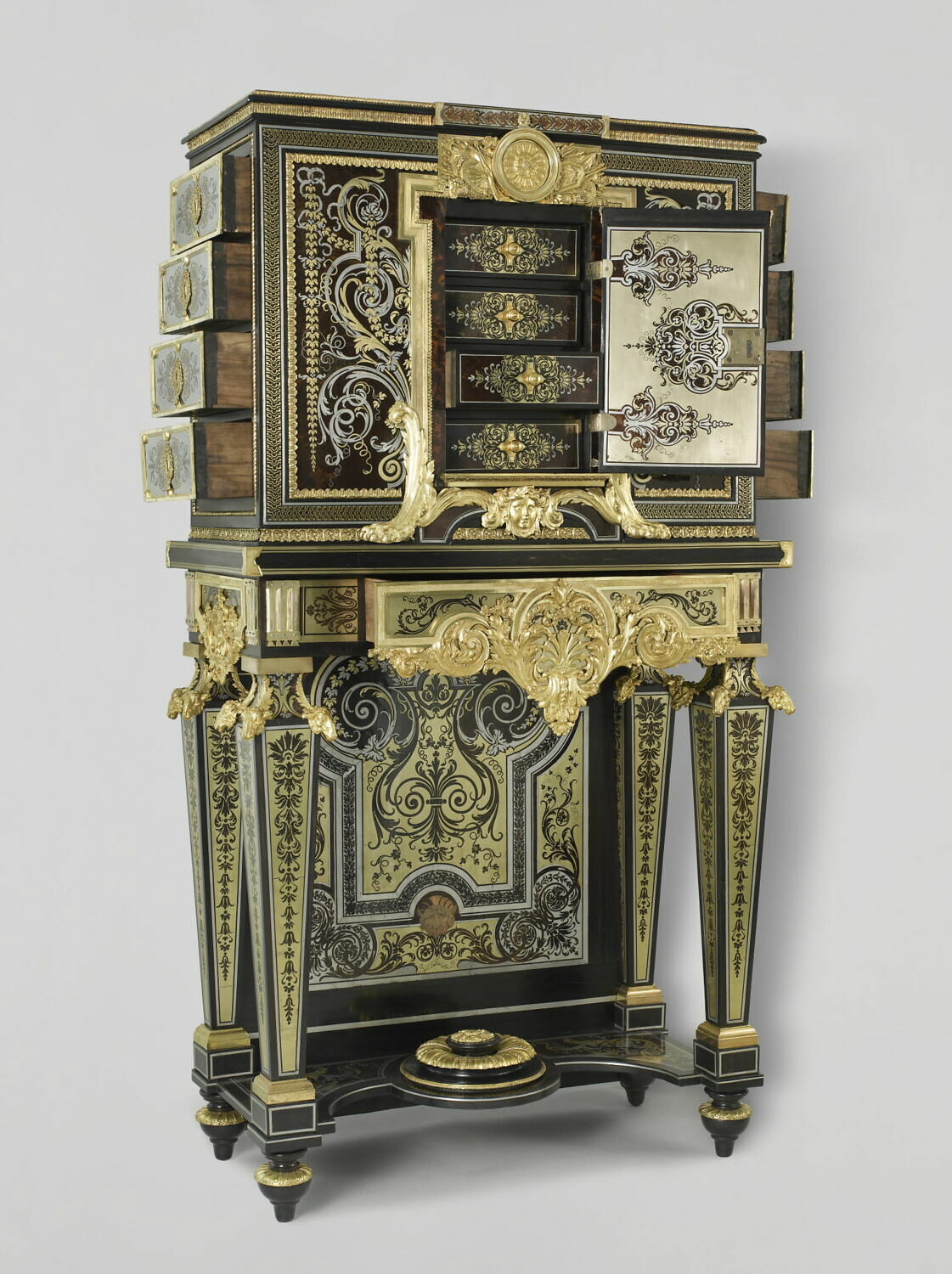
A Cabinet-on-Stand (one of a pair), circa 1685-1715, today at the Louvre, accession number OA5468.
Understanding that a 17th-century piece will almost inevitably show signs of lifting brass, restoration patches, and the warm patina of genuine mercury gilding helps dispel the dangerous myth that pristine condition equals authenticity. Indeed, a piece claimed to be from 1700 that displays absolutely flat marquetry, perfect bright colour, and no visible repairs is almost certainly a 19th-century reproduction. The survival of such fragile materials in perfect condition is mechanically impossible over three centuries.
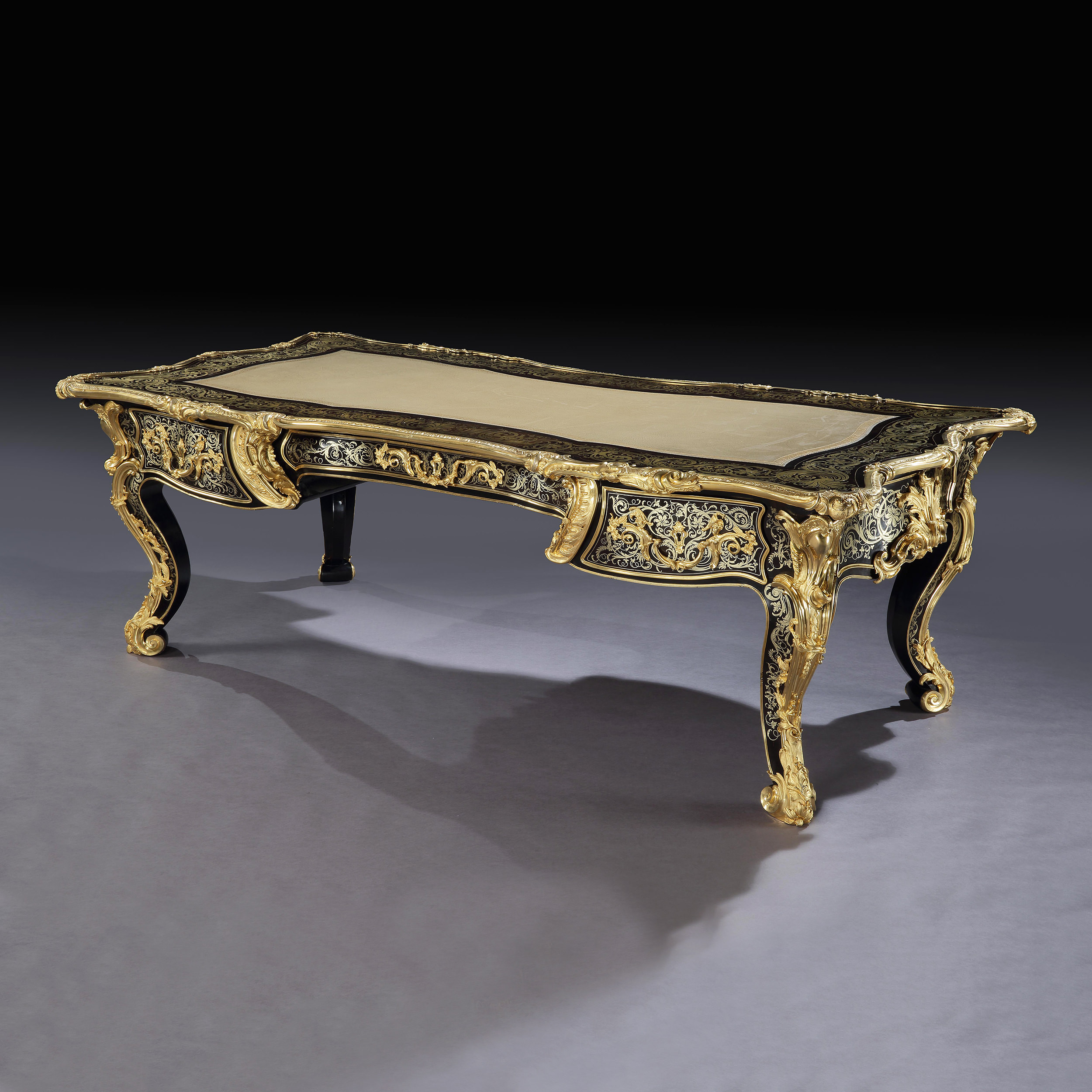
A 19th century marvel, this magnificent bureau plat (writing table) of palatial proportions was made by Toms & Luscombe of London and exhibited at the 1862 London universal exhibition. It later made an appearance in the 1962 Bond film, Dr. No, starring the legendary Sean Connery. With Butchoff Antiques.
For collectors, curators, and enthusiasts, this knowledge transforms the act of examination from subjective appreciation into rigorous connoisseurship. By delving into the intricate technical details, material sourcing, and stylistic nuances that define Boulle's work, one can uncover the true artistic and historical significance of these pieces, ensuring that the legacy of this legendary ébéniste is not only preserved but properly understood and celebrated for generations to come. The market for Boulle furniture remains robust, often exceeding 6-figure sums for single pieces, making authentication not merely an academic exercise but a practical necessity for anyone investing in these extraordinary examples of French decorative arts.
Citations
[1] Kisluk-Grosheide, Danielle O. "Boulle Work and the Art of Marquetry." The Metropolitan Museum of Art Bulletin, vol. 54, no. 2, 1996, pp. 1–56.
[2] Coutts, Howard. The Art of Ceramics: European Ceramic Design, 1500-1830. Yale University Press, 2001.
[3] Verlet, Pierre. Le Mobilier Royal Français. Picard, 1990.
[4] Bowett, Adam. Woods in British Furniture-Making 1400-1900: An Illustrated Historical Dictionary. Oblong, 2012.
[5] Thornton, Peter. Seventeenth-Century Interior Decoration in England, France and Holland. Yale University Press, 1978.
written by Rainier Schraepen