Vip access

 Favourites






















January 2026
Patina, Perfection, and Provenance

The Technical Deep Dive into High-Value Ormolu and Gilt Bronze
In the forensic hierarchy of antique authentication, no element is more vulnerable to falsification - or more critical to valuation - than the gilt bronze mounts that adorn the finest furniture and decorative objects. While the connoisseur's eye may be drawn first to the marquetry, the silk, or the marble, it is the ormolu that most reliably separates the masterpiece from the reproduction, the investment-grade antique from the decorative curio. Understanding how to read gilt bronze is, therefore, the ultimate test of connoisseurship.
The term "ormolu" itself derives from the French or moulu - literally "ground gold" - referring to the gold dust mixed with mercury to create the amalgam paste central to the traditional gilding process. Yet this simple etymology belies the extraordinary complexity of the craft and the forensic challenges facing today's collector. A single candelabrum by Pierre Gouthière might bear the accumulated evidence of three centuries: the original fire gilding, atmospheric deposits from coal fires and candlelight, nineteenth-century cleaning damage, and twentieth-century lacquer. Learning to interpret this layered history is essential for anyone serious about acquiring high-value gilt bronze.
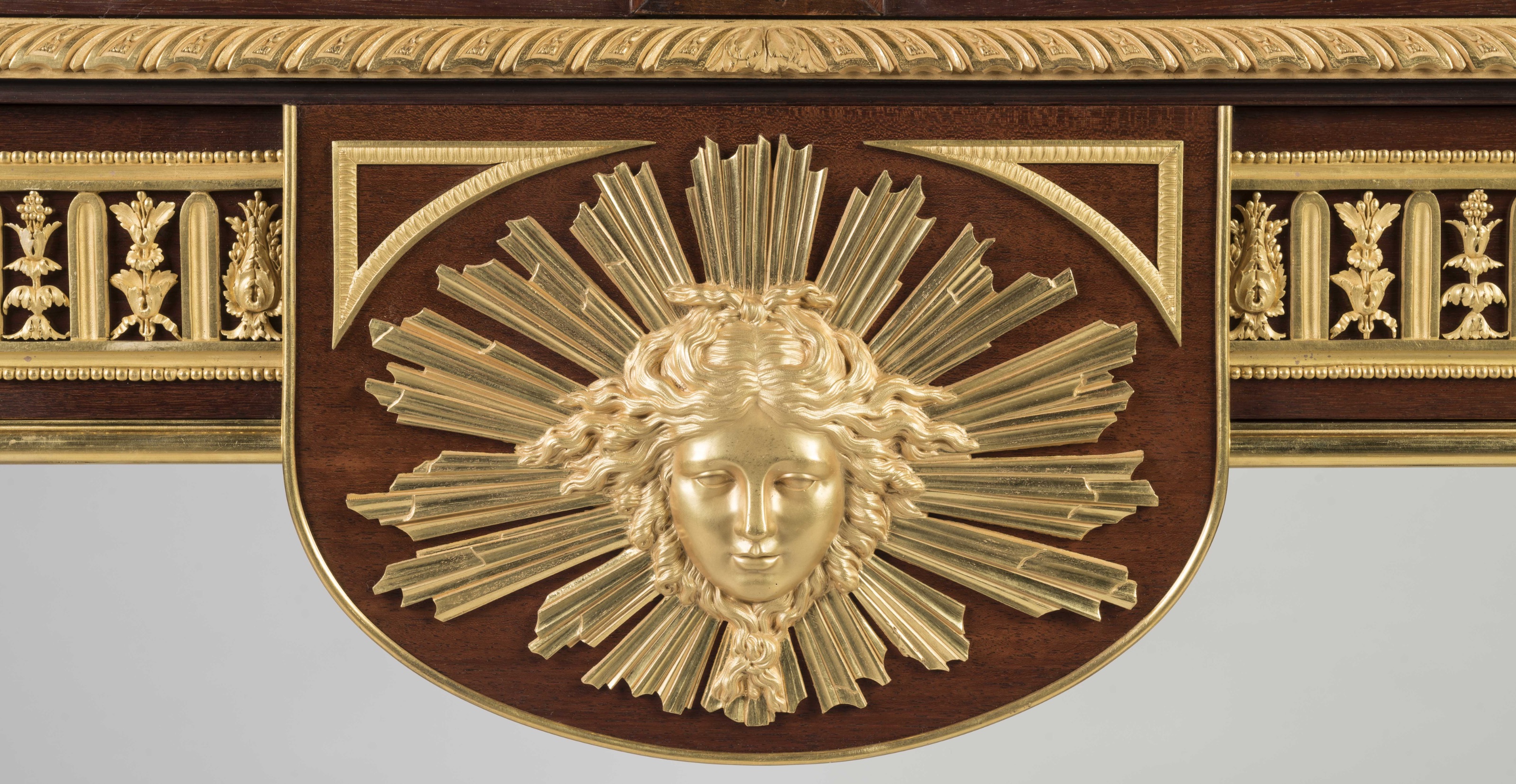
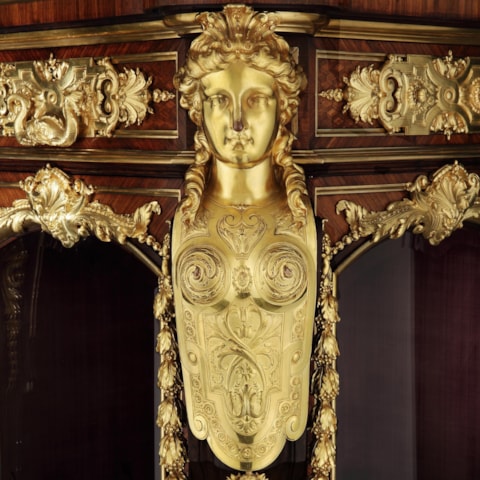
Detail of a gilt bronze Mask of Apollo, the Sun God, on a sunburst background. The burnished and matte surface treatment showingcasing the skill of Henry Dasson's Parisian workshop. Photo: Butchoff Antiques.
The Alchemy of Fire Gilding: Mercury, Heat, and the Diffusion Bond
The process that defines true ormolu - dorure au mercure or mercury gilding - is a metallurgical technique so specific that its physical signature remains detectable centuries later. Understanding this process is fundamental to authentication.
The gilder began with high-purity gold, hammered into thin plates or filed into fine dust to maximise surface area. This gold was introduced to heated mercury, typically in a ratio of one part gold to six or eight parts mercury. The resulting amalgam formed a silvery, buttery paste - neither liquid nor truly solid, but a cold-formed crystallographic structure that could be manipulated like soft wax.
Before application, the bronze substrate required careful preparation. A solution of mercury dissolved in nitric acid - the gilder's "quickening" bath - deposited a thin film of metallic mercury onto the copper alloy surface. This mercurial layer ensured the gold amalgam would wet the bronze evenly rather than beading up like water on oil.
The amalgam was then spread across the object using wire brushes, leaving it entirely silver in appearance. The critical transformation occurred over a charcoal fire: as the temperature approached 357°C, the mercury vaporised. This was the most dangerous moment in the process - the toxic fumes decimated generations of doreurs, few of whom survived past forty. But it was also the moment that created ormolu's unique quality: as the mercury escaped, the gold atoms diffused into the crystal lattice of the bronze beneath, forming an intermetallic alloy at the interface. This diffusion bond is what makes fire gilding virtually immune to peeling or flaking, unlike later electroplated surfaces that merely sit atop the metal.
For the forensic examiner, the most reliable diagnostic lies in the surface microstructure. As mercury bubbles escaped during vaporisation, they left microscopic voids throughout the gold layer. Under magnification, fire gilding presents a distinctive "spongy" topography - irregular, porous, and alive with texture. This micro-porosity scatters light in a way that gives ormolu its characteristic warmth: a soft, deep, almost buttery luminosity that electroplating, with its flat and uniform surface, simply cannot replicate. The difference is immediately apparent to the trained eye - fire gilding glows; electroplating merely shines.
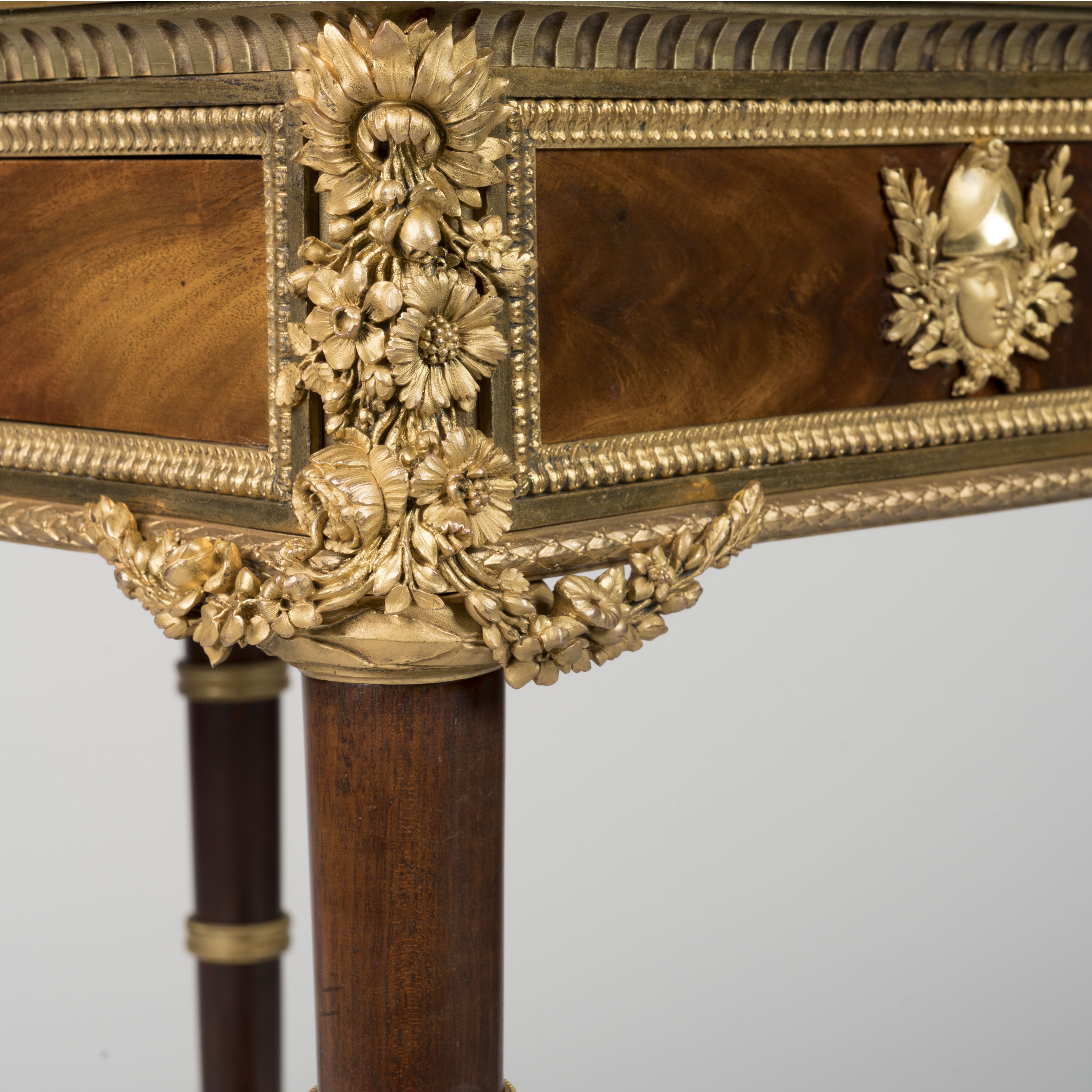
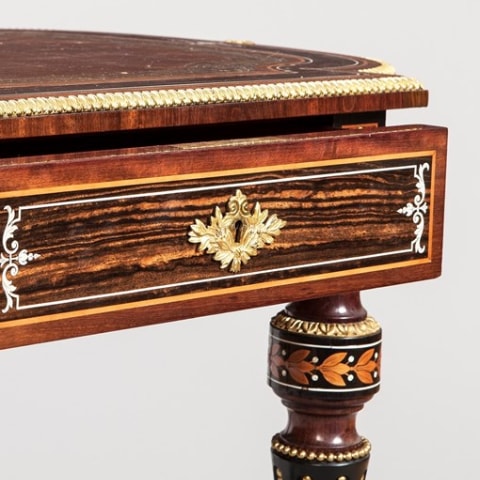
A late 19th century table after the original design by Jean-Henri Riesener showing the ciseleur's skill. Each detail has been hand-chased using special tools to achieve a plethora of textures. Photo: Butchoff Antiques
The Ciseleur's Signature: Reading the Language of the Chisel
While the fondeur (caster) provides the form, it is the ciseleur (chaser) who provides the resolution. In high-value ormolu, the quality of chasing is often the primary determinant of value, overriding considerations of size, weight, or even the thickness of the gold layer. A poorly chased piece, regardless of its precious metal content, is optically dead.
Chasing - ciselure - is not engraving. The chaser does not remove material but displaces and compresses it through thousands of precise hammer strikes. Using an arsenal of specialised tools - tracers for defining outlines, matting punches for creating texture, burnishers for achieving mirror finishes - the master chaser re-sculpts the cold metal, sharpening details lost during casting and creating the interplay of light and shadow that brings bronze to life.
The highest achievement of eighteenth-century chasing lies in the contrast between mat (matte) and bruni (burnished) surfaces. Matting tools with textured tips - producing effects from fine stippling (pointillé) to granular dust (sablé) - create non-reflective areas that scatter light like yellow velvet. Burnishers of polished steel or agate, rubbed vigorously against high points, compress the gold and close the micro-pores, creating mirror-like surfaces that reflect light with laser precision. On a masterwork by Gouthière or Thomire, this contrast gives three-dimensionality even in dim candlelight, the matte backgrounds receding while burnished highlights advance.
Attribution to specific hands often relies on the "handwriting" of these chisel strokes. Pierre Gouthière (1732–1813), inventor of the dorure au mat technique, produced chasing so fine it resembles goldsmithing rather than bronzework - look for microscopic cross-hatching and extreme textural variation within a single leaf. Pierre-Philippe Thomire (1751–1843), master of the Empire style, is identifiable by his architectural precision: the transitions between matte and burnish are sharp and abrupt, reflecting Napoleonic rigour. Jacques Caffiéri (1678–1755), the Rococo virtuoso, left tool marks that follow the organic flow of his designs, enhancing the sense of molten movement.
The degradation of chasing quality is often the easiest way to identify later copies. Eighteenth-century chasers spent hundreds of hours undercutting decorative elements - separating a leaf tip from its background, creating depth through painstaking labour. On a masterpiece, you can slide paper behind an acanthus scroll; on a nineteenth-century commercial copy, the leaf is fused to save time. Later industrial bronziers often substituted acid etching for hand-matting, producing a uniform, "sugary" texture that lacks the organic irregularity of genuine punch work.
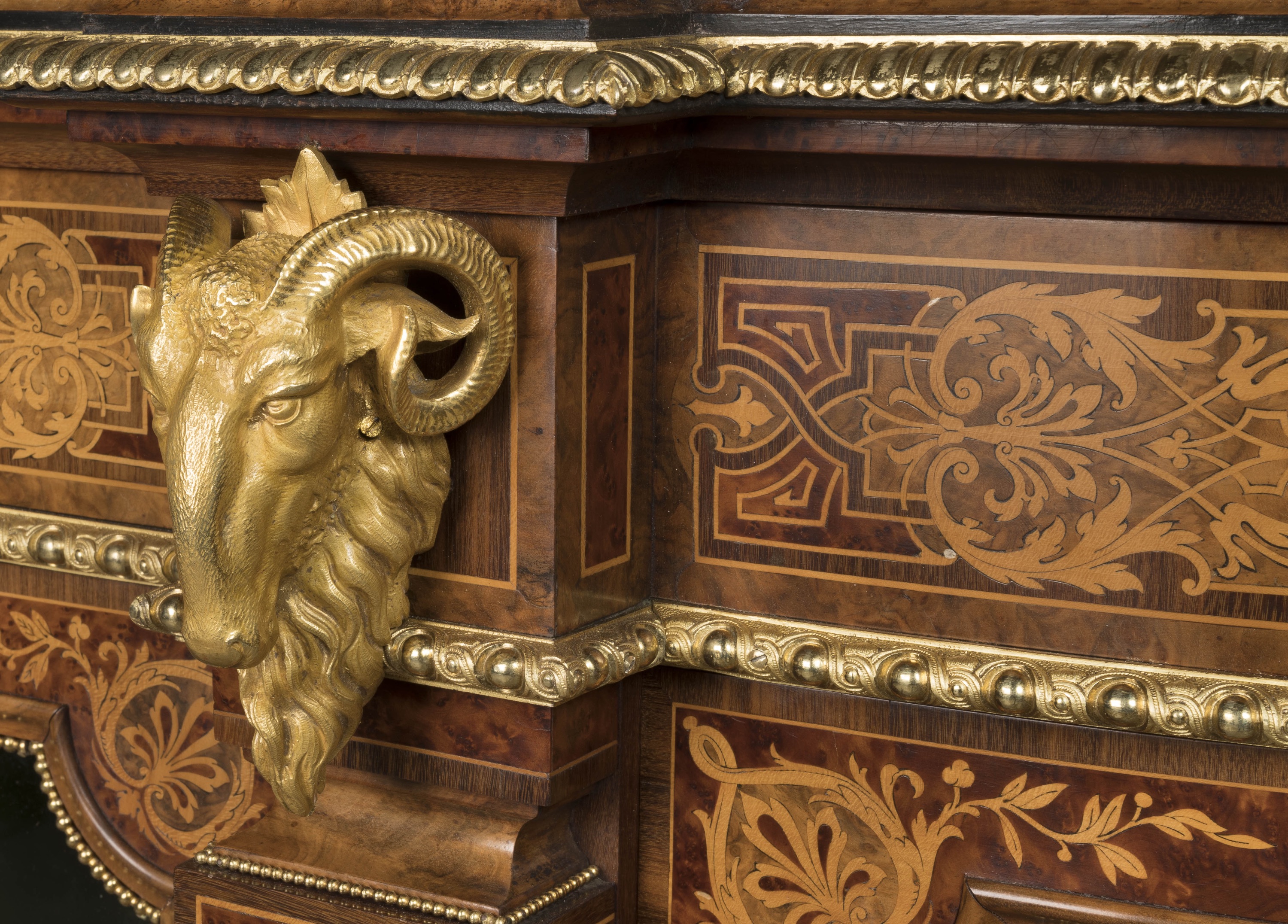
Detail of a cabinet supplied by Holland & Sons for Whitbourne Hall in the 1860s. English ormolu such as this evolved along different lines of their french competitors and was largely the product of industrial manufacture in centres of production such as Birmingham. Photo: Butchoff Antiques
The Boulton Standard: British Industrial Excellence
While the Parisian guild system produced individual virtuosos, Matthew Boulton (1728–1809) demonstrated that industrial organisation could achieve comparable quality through systematic excellence. At his Soho Manufactory in Birmingham, Boulton explicitly set out to challenge French dominance in the luxury metalwork trade - and largely succeeded.
Boulton's approach differed fundamentally from the French model. Where Parisian production separated fondeurs, ciseleurs, and doreurs into distinct guild-controlled specialisms, Boulton integrated these functions under one roof, applying early principles of division of labour to achieve consistency and scale. His mounts display a distinctive "machine-like" precision: exceptionally crisp, symmetrical, and uniform chasing that, while sometimes lacking the spontaneous artistry of Gouthière, met rigorous quality standards across large production runs.
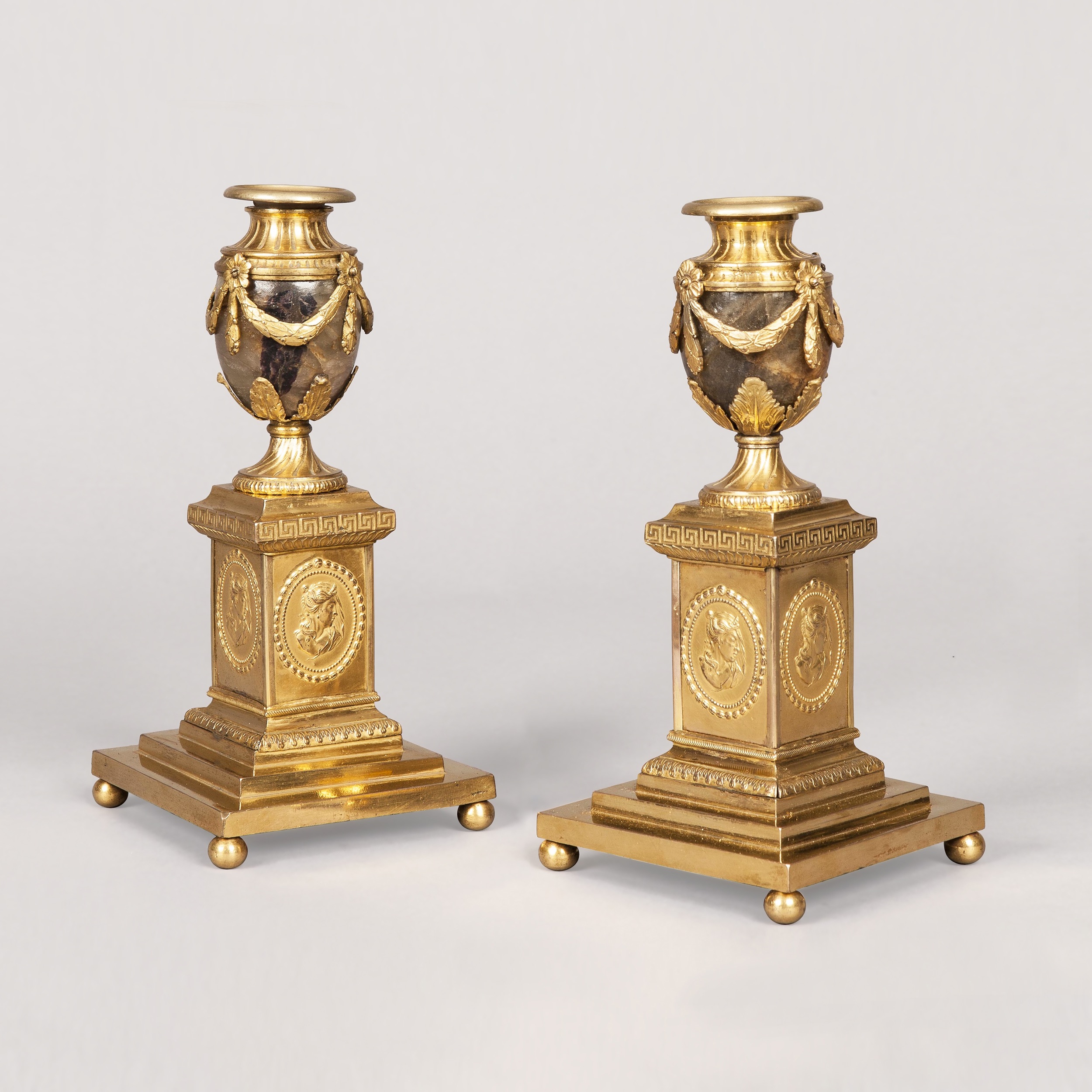
A pair of 'Cleopatra' Candle Vases by Matthew Boulton, circa 1770. This documented pair by Boulton exhibit all the characteristics of his greatest work, including fine specimens of Blue John mounted with ormolu. Previously with Butchoff Antiques.
For collectors, Boulton pieces carry specific provenance indicators. Unlike most French contemporaries, he occasionally marked his work - stamps reading "Boulton & Fothergill" or simply "Soho" are the Holy Grail of British metalwork attribution. His signature material combination was Blue John (Derbyshire fluorspar), a rare purple-and-yellow mineral he mounted in ormolu with unmatched elegance. If you encounter a Blue John vase with gilt bronze mounts, Boulton's Soho Manufactory is the primary suspect.
Boulton's partnership with James Watt - financing the development of the steam engine - provided the capital to invest in the finest materials. His mercury gilding was often thicker and more durable than cheaper English competitors, and he developed proprietary "gilding wax" recipes that achieved a rich, reddish-gold hue distinct from the lemon-yellow favoured in Paris. This British warmth remains a useful diagnostic when examining unmarked pieces of the period.
The Elkington Watershed: 1840 and the Death of Mercury
For forensic authentication, no date matters more than 1840. In that year, George Richards Elkington of Birmingham patented the first commercially viable method of electrogilding, initiating a technological revolution that would eventually make mercury gilding obsolete.
The difference is metallurgical and absolute. Fire gilding creates a diffusion bond - gold atoms penetrate the bronze substrate, forming an intermetallic alloy. Electroplating deposits gold via electrical current in a cyanide solution; the bond is merely electrostatic, the gold sitting atop the bronze without integration. Fire-gilt layers typically measure 2–10 microns thick and display characteristic porosity. Electroplated layers are usually less than one micron - often a tenth of that thickness - and present a uniform, crystalline surface.
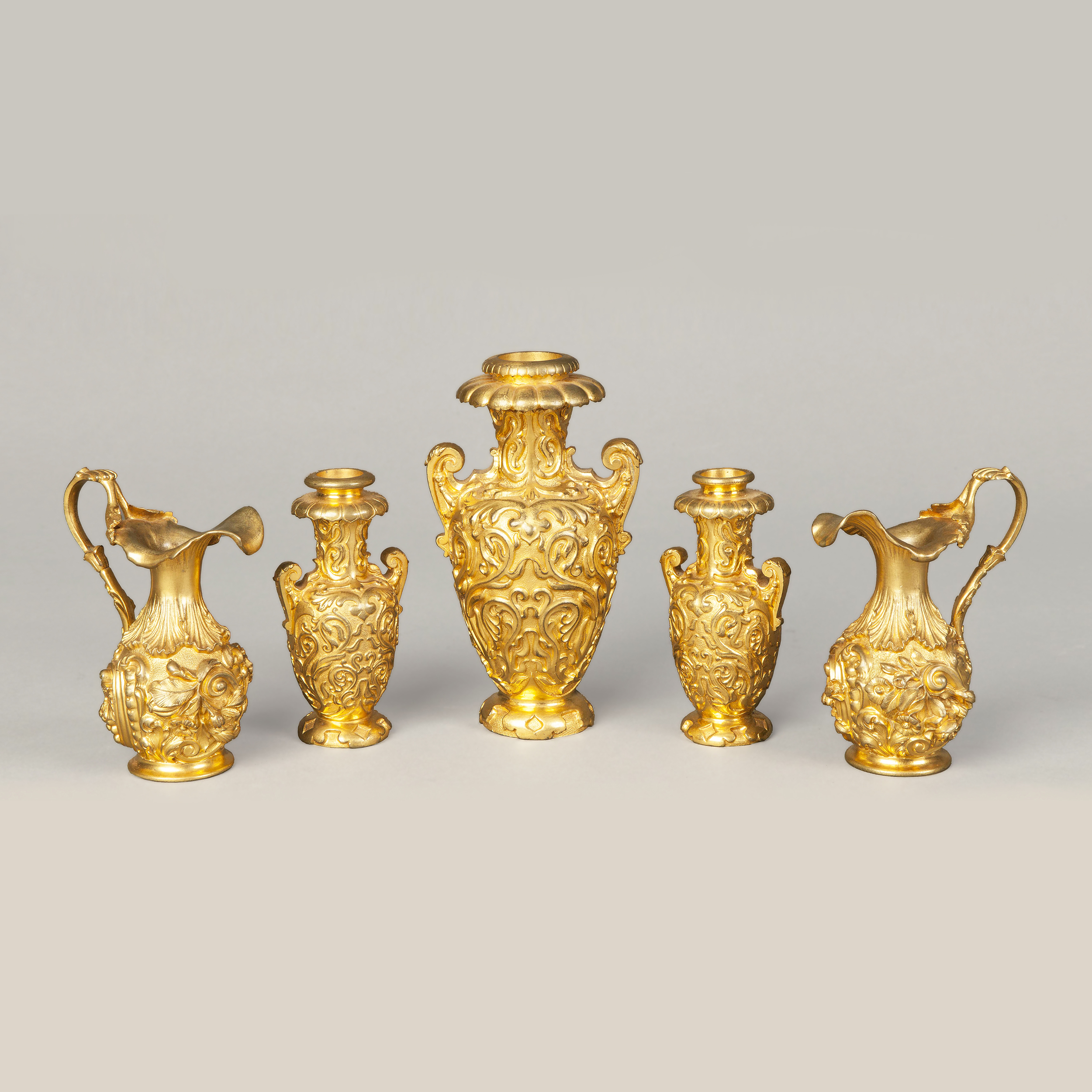
This five-piece set, marked Elkington, exhibits a very early type of electroplated gilding. Dating to the mid-19th century, they exhibit very little wear as decorative items. Photo: Butchoff Antiques
The visual consequences are immediate. Electroplated objects appear "hard": because the gold layer is so thin, it mirrors the substrate perfectly, lacking the soft, velvety light diffusion caused by the micro-bubbles of fire gilding. The difference in durability is equally stark. A fire-gilt piece from 1760 may retain its brilliance today, the thick gold layer showing only gentle high-point wear on exposed features. An electroplated piece from 1860 will often appear brassy and rubbed, the thin coating worn through entirely on handles, edges, and prominences.
This chronological marker is forensically decisive. If scientific analysis reveals no mercury residue in the gold layer - detectable via X-ray fluorescence (XRF) testing - the gilding cannot predate 1840. The presence of 10–15% retained mercury, by contrast, confirms fire gilding and is consistent with eighteenth-century manufacture. This single test can resolve attribution disputes worth hundreds of thousands of pounds.
Reading the Patina: History Written in Dust and Oxidation
Strictly speaking, gold does not patinate - it is a noble metal, chemically inert. What we call "patina" on ormolu is actually a complex accumulation: atmospheric deposits, degraded protective coatings, and corrosion products migrating from the copper substrate through pores in the gold layer. Learning to read this accumulation is essential forensic practice.
An authentic piece that has escaped aggressive cleaning will not appear bright yellow. It will display a mellow, warm, slightly darkened tone - the accumulated evidence of centuries in coal-heated rooms, surrounded by candles and tobacco smoke. Crucially, this accumulation follows logic: genuine dirt concentrates in recesses where dusters cannot reach, while high points remain cleaner from handling and polishing. If the "dirt" appears uniformly distributed, or sits as a smooth, tacky glaze rather than gritty accretion, suspect artificial antiquing.
More sinister than surface dirt is active bronze disease - the "cancer" of copper alloys. Caused by chlorides reacting with copper to form cuprous chloride, this condition creates a self-perpetuating cycle: humidity converts the chloride to hydrochloric acid, which attacks more copper, generating more chloride. It appears as light green, powdery, fluffy spots erupting through the gold layer - distinct from the hard, dark patina of stable oxidation. Bronze disease requires immediate professional treatment; left unchecked, it will consume the object.
The greatest tragedy, however, is over-cleaning. Ammonia-based solutions - once standard for brightening clock cases - leach copper from the bronze substrate, leaving the gold pale, whitish, and "chalky." Cyanide dips, historically used to clean gold, actually dissolve the gilding itself, stripping high points to bare bronze while gold survives only in protected recesses. Abrasive polishing rounds the sharp edges of fine chasing, transforming sculptural precision into a "melted soap" appearance. A piece subjected to such treatment is considered "skinned" by the market - and valued accordingly.
The Market Reckoning: Condition as Currency
The sophisticated collector understands a counter-intuitive truth: in the ormolu market, brightness often signals destruction. The highest premiums attach not to the shiniest objects but to those retaining their historical accumulation - pieces described as dans son jus ("in their juice"), untouched for generations.
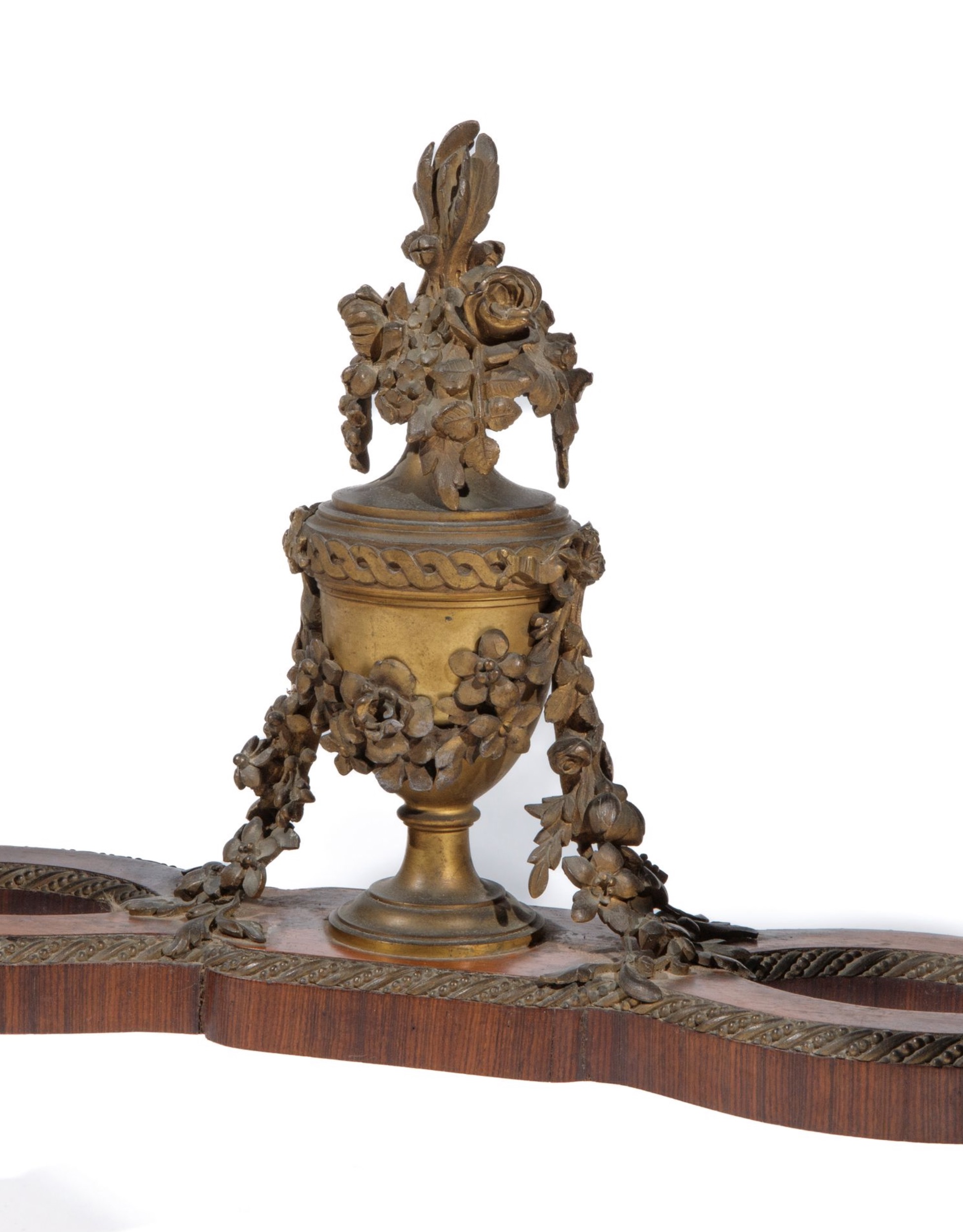
Detail of a cabinet by François Linke acquired by Butchoff 'dans son jus,' showing an untouched ormolu finish with no previous signs of restoration.
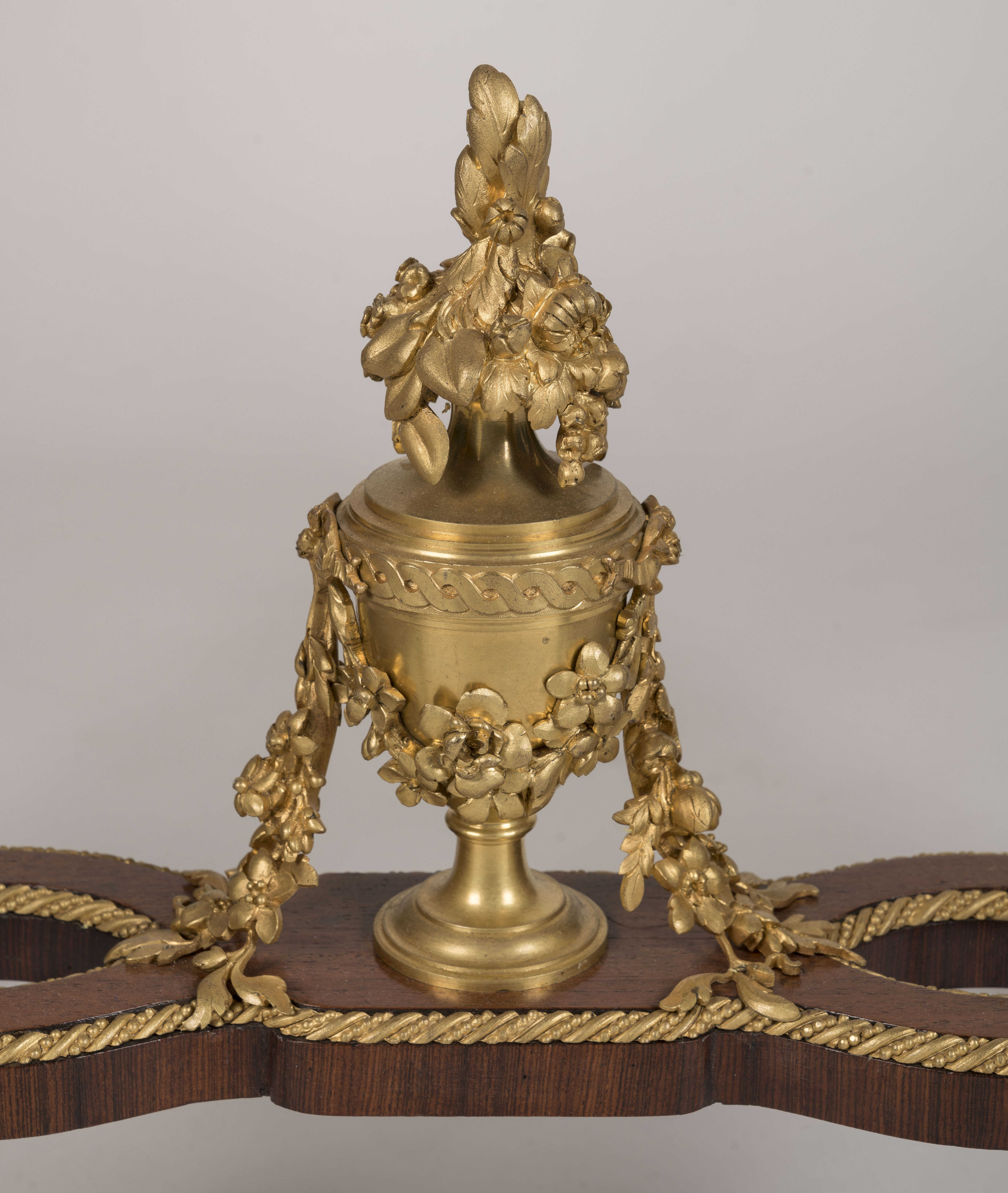
Following careful conservation using non-abrasive techniques, the original and inert gilded surface has been revealed preserving the nuances of the ciseleur's chasing.
The financial penalties for over-restoration are severe. A "skinned" bronze - acid-dipped or machine-buffed to uniform brightness - may lose 50–70% of its potential value at auction. The sculptural resolution created by the original ciseleur is gone; what remains is merely a decorative furnishing, not a work of art. Conversely, dealers and collectors will pay premiums of 20–30% for dirty, dark pieces that clearly retain original surfaces. Dirt, in this context, is proof: proof the chasing survives intact, proof the buyer can control any future conservation, proof of age itself.
Attribution drives value exponentially. "Style of Gouthière" commands modest prices; "Attributed to Gouthière" significantly more; a piece documented in the Journal du Garde-Meuble with a royal inventory number linking it to a specific commission can multiply value tenfold. A pair of Louis XVI candelabra might sell for £50,000; the same pair, proven to have adorned Marie Antoinette's apartments, could realise £500,000 or more.
Conclusion: The Forensic Imperative
Examining gilt bronze demands the integration of art history, materials science, and market intelligence. The collector must understand eighteenth-century guild structures and nineteenth-century industrial innovation; must recognise the visual signatures of fire gilding and electroplate, of hand-chasing and acid-etching, of genuine patina and artificial toning. Scientific analysis - XRF spectrometry, scanning electron microscopy, gold-layer thickness measurement - now provides objective data to complement connoisseurial judgment.
Yet the fundamental lesson is simple: in ormolu, as in all areas of serious collecting, knowledge protects capital. The bright, perfectly clean candelabrum that seduces the novice may prove a skinned ruin; the dark, grimy chandelier dismissed by the casual viewer may conceal surfaces untouched since the ancien régime. Those who learn to read the evidence - in the micro-porosity of the gold, the tool marks of the chaser, the logic of the dirt - will find themselves equipped not merely to appreciate these extraordinary objects, but to acquire them wisely.
Written by Rainier Schraepen
In the forensic hierarchy of antique authentication, no element is more vulnerable to falsification - or more critical to valuation - than the gilt bronze mounts that adorn the finest furniture and decorative objects. While the connoisseur's eye may be drawn first to the marquetry, the silk, or the marble, it is the ormolu that most reliably separates the masterpiece from the reproduction, the investment-grade antique from the decorative curio. Understanding how to read gilt bronze is, therefore, the ultimate test of connoisseurship.
The term "ormolu" itself derives from the French or moulu - literally "ground gold" - referring to the gold dust mixed with mercury to create the amalgam paste central to the traditional gilding process. Yet this simple etymology belies the extraordinary complexity of the craft and the forensic challenges facing today's collector. A single candelabrum by Pierre Gouthière might bear the accumulated evidence of three centuries: the original fire gilding, atmospheric deposits from coal fires and candlelight, nineteenth-century cleaning damage, and twentieth-century lacquer. Learning to interpret this layered history is essential for anyone serious about acquiring high-value gilt bronze.
Detail of a gilt bronze Mask of Apollo, the Sun God, on a sunburst background. The burnished and matte surface treatment showingcasing the skill of Henry Dasson's Parisian workshop. Photo: Butchoff Antiques.
The Alchemy of Fire Gilding: Mercury, Heat, and the Diffusion Bond
The process that defines true ormolu - dorure au mercure or mercury gilding - is a metallurgical technique so specific that its physical signature remains detectable centuries later. Understanding this process is fundamental to authentication.
The gilder began with high-purity gold, hammered into thin plates or filed into fine dust to maximise surface area. This gold was introduced to heated mercury, typically in a ratio of one part gold to six or eight parts mercury. The resulting amalgam formed a silvery, buttery paste - neither liquid nor truly solid, but a cold-formed crystallographic structure that could be manipulated like soft wax.
Before application, the bronze substrate required careful preparation. A solution of mercury dissolved in nitric acid - the gilder's "quickening" bath - deposited a thin film of metallic mercury onto the copper alloy surface. This mercurial layer ensured the gold amalgam would wet the bronze evenly rather than beading up like water on oil.
The amalgam was then spread across the object using wire brushes, leaving it entirely silver in appearance. The critical transformation occurred over a charcoal fire: as the temperature approached 357°C, the mercury vaporised. This was the most dangerous moment in the process - the toxic fumes decimated generations of doreurs, few of whom survived past forty. But it was also the moment that created ormolu's unique quality: as the mercury escaped, the gold atoms diffused into the crystal lattice of the bronze beneath, forming an intermetallic alloy at the interface. This diffusion bond is what makes fire gilding virtually immune to peeling or flaking, unlike later electroplated surfaces that merely sit atop the metal.
For the forensic examiner, the most reliable diagnostic lies in the surface microstructure. As mercury bubbles escaped during vaporisation, they left microscopic voids throughout the gold layer. Under magnification, fire gilding presents a distinctive "spongy" topography - irregular, porous, and alive with texture. This micro-porosity scatters light in a way that gives ormolu its characteristic warmth: a soft, deep, almost buttery luminosity that electroplating, with its flat and uniform surface, simply cannot replicate. The difference is immediately apparent to the trained eye - fire gilding glows; electroplating merely shines.
A late 19th century table after the original design by Jean-Henri Riesener showing the ciseleur's skill. Each detail has been hand-chased using special tools to achieve a plethora of textures. Photo: Butchoff Antiques
The Ciseleur's Signature: Reading the Language of the Chisel
While the fondeur (caster) provides the form, it is the ciseleur (chaser) who provides the resolution. In high-value ormolu, the quality of chasing is often the primary determinant of value, overriding considerations of size, weight, or even the thickness of the gold layer. A poorly chased piece, regardless of its precious metal content, is optically dead.
Chasing - ciselure - is not engraving. The chaser does not remove material but displaces and compresses it through thousands of precise hammer strikes. Using an arsenal of specialised tools - tracers for defining outlines, matting punches for creating texture, burnishers for achieving mirror finishes - the master chaser re-sculpts the cold metal, sharpening details lost during casting and creating the interplay of light and shadow that brings bronze to life.
The highest achievement of eighteenth-century chasing lies in the contrast between mat (matte) and bruni (burnished) surfaces. Matting tools with textured tips - producing effects from fine stippling (pointillé) to granular dust (sablé) - create non-reflective areas that scatter light like yellow velvet. Burnishers of polished steel or agate, rubbed vigorously against high points, compress the gold and close the micro-pores, creating mirror-like surfaces that reflect light with laser precision. On a masterwork by Gouthière or Thomire, this contrast gives three-dimensionality even in dim candlelight, the matte backgrounds receding while burnished highlights advance.
Attribution to specific hands often relies on the "handwriting" of these chisel strokes. Pierre Gouthière (1732–1813), inventor of the dorure au mat technique, produced chasing so fine it resembles goldsmithing rather than bronzework - look for microscopic cross-hatching and extreme textural variation within a single leaf. Pierre-Philippe Thomire (1751–1843), master of the Empire style, is identifiable by his architectural precision: the transitions between matte and burnish are sharp and abrupt, reflecting Napoleonic rigour. Jacques Caffiéri (1678–1755), the Rococo virtuoso, left tool marks that follow the organic flow of his designs, enhancing the sense of molten movement.
The degradation of chasing quality is often the easiest way to identify later copies. Eighteenth-century chasers spent hundreds of hours undercutting decorative elements - separating a leaf tip from its background, creating depth through painstaking labour. On a masterpiece, you can slide paper behind an acanthus scroll; on a nineteenth-century commercial copy, the leaf is fused to save time. Later industrial bronziers often substituted acid etching for hand-matting, producing a uniform, "sugary" texture that lacks the organic irregularity of genuine punch work.
Detail of a cabinet supplied by Holland & Sons for Whitbourne Hall in the 1860s. English ormolu such as this evolved along different lines of their french competitors and was largely the product of industrial manufacture in centres of production such as Birmingham. Photo: Butchoff Antiques
The Boulton Standard: British Industrial Excellence
While the Parisian guild system produced individual virtuosos, Matthew Boulton (1728–1809) demonstrated that industrial organisation could achieve comparable quality through systematic excellence. At his Soho Manufactory in Birmingham, Boulton explicitly set out to challenge French dominance in the luxury metalwork trade - and largely succeeded.
Boulton's approach differed fundamentally from the French model. Where Parisian production separated fondeurs, ciseleurs, and doreurs into distinct guild-controlled specialisms, Boulton integrated these functions under one roof, applying early principles of division of labour to achieve consistency and scale. His mounts display a distinctive "machine-like" precision: exceptionally crisp, symmetrical, and uniform chasing that, while sometimes lacking the spontaneous artistry of Gouthière, met rigorous quality standards across large production runs.
A pair of 'Cleopatra' Candle Vases by Matthew Boulton, circa 1770. This documented pair by Boulton exhibit all the characteristics of his greatest work, including fine specimens of Blue John mounted with ormolu. Previously with Butchoff Antiques.
For collectors, Boulton pieces carry specific provenance indicators. Unlike most French contemporaries, he occasionally marked his work - stamps reading "Boulton & Fothergill" or simply "Soho" are the Holy Grail of British metalwork attribution. His signature material combination was Blue John (Derbyshire fluorspar), a rare purple-and-yellow mineral he mounted in ormolu with unmatched elegance. If you encounter a Blue John vase with gilt bronze mounts, Boulton's Soho Manufactory is the primary suspect.
Boulton's partnership with James Watt - financing the development of the steam engine - provided the capital to invest in the finest materials. His mercury gilding was often thicker and more durable than cheaper English competitors, and he developed proprietary "gilding wax" recipes that achieved a rich, reddish-gold hue distinct from the lemon-yellow favoured in Paris. This British warmth remains a useful diagnostic when examining unmarked pieces of the period.
The Elkington Watershed: 1840 and the Death of Mercury
For forensic authentication, no date matters more than 1840. In that year, George Richards Elkington of Birmingham patented the first commercially viable method of electrogilding, initiating a technological revolution that would eventually make mercury gilding obsolete.
The difference is metallurgical and absolute. Fire gilding creates a diffusion bond - gold atoms penetrate the bronze substrate, forming an intermetallic alloy. Electroplating deposits gold via electrical current in a cyanide solution; the bond is merely electrostatic, the gold sitting atop the bronze without integration. Fire-gilt layers typically measure 2–10 microns thick and display characteristic porosity. Electroplated layers are usually less than one micron - often a tenth of that thickness - and present a uniform, crystalline surface.
This five-piece set, marked Elkington, exhibits a very early type of electroplated gilding. Dating to the mid-19th century, they exhibit very little wear as decorative items. Photo: Butchoff Antiques
The visual consequences are immediate. Electroplated objects appear "hard": because the gold layer is so thin, it mirrors the substrate perfectly, lacking the soft, velvety light diffusion caused by the micro-bubbles of fire gilding. The difference in durability is equally stark. A fire-gilt piece from 1760 may retain its brilliance today, the thick gold layer showing only gentle high-point wear on exposed features. An electroplated piece from 1860 will often appear brassy and rubbed, the thin coating worn through entirely on handles, edges, and prominences.
This chronological marker is forensically decisive. If scientific analysis reveals no mercury residue in the gold layer - detectable via X-ray fluorescence (XRF) testing - the gilding cannot predate 1840. The presence of 10–15% retained mercury, by contrast, confirms fire gilding and is consistent with eighteenth-century manufacture. This single test can resolve attribution disputes worth hundreds of thousands of pounds.
Reading the Patina: History Written in Dust and Oxidation
Strictly speaking, gold does not patinate - it is a noble metal, chemically inert. What we call "patina" on ormolu is actually a complex accumulation: atmospheric deposits, degraded protective coatings, and corrosion products migrating from the copper substrate through pores in the gold layer. Learning to read this accumulation is essential forensic practice.
An authentic piece that has escaped aggressive cleaning will not appear bright yellow. It will display a mellow, warm, slightly darkened tone - the accumulated evidence of centuries in coal-heated rooms, surrounded by candles and tobacco smoke. Crucially, this accumulation follows logic: genuine dirt concentrates in recesses where dusters cannot reach, while high points remain cleaner from handling and polishing. If the "dirt" appears uniformly distributed, or sits as a smooth, tacky glaze rather than gritty accretion, suspect artificial antiquing.
More sinister than surface dirt is active bronze disease - the "cancer" of copper alloys. Caused by chlorides reacting with copper to form cuprous chloride, this condition creates a self-perpetuating cycle: humidity converts the chloride to hydrochloric acid, which attacks more copper, generating more chloride. It appears as light green, powdery, fluffy spots erupting through the gold layer - distinct from the hard, dark patina of stable oxidation. Bronze disease requires immediate professional treatment; left unchecked, it will consume the object.
The greatest tragedy, however, is over-cleaning. Ammonia-based solutions - once standard for brightening clock cases - leach copper from the bronze substrate, leaving the gold pale, whitish, and "chalky." Cyanide dips, historically used to clean gold, actually dissolve the gilding itself, stripping high points to bare bronze while gold survives only in protected recesses. Abrasive polishing rounds the sharp edges of fine chasing, transforming sculptural precision into a "melted soap" appearance. A piece subjected to such treatment is considered "skinned" by the market - and valued accordingly.
The Market Reckoning: Condition as Currency
The sophisticated collector understands a counter-intuitive truth: in the ormolu market, brightness often signals destruction. The highest premiums attach not to the shiniest objects but to those retaining their historical accumulation - pieces described as dans son jus ("in their juice"), untouched for generations.
Detail of a cabinet by François Linke acquired by Butchoff 'dans son jus,' showing an untouched ormolu finish with no previous signs of restoration.
Following careful conservation using non-abrasive techniques, the original and inert gilded surface has been revealed preserving the nuances of the ciseleur's chasing.
The financial penalties for over-restoration are severe. A "skinned" bronze - acid-dipped or machine-buffed to uniform brightness - may lose 50–70% of its potential value at auction. The sculptural resolution created by the original ciseleur is gone; what remains is merely a decorative furnishing, not a work of art. Conversely, dealers and collectors will pay premiums of 20–30% for dirty, dark pieces that clearly retain original surfaces. Dirt, in this context, is proof: proof the chasing survives intact, proof the buyer can control any future conservation, proof of age itself.
Attribution drives value exponentially. "Style of Gouthière" commands modest prices; "Attributed to Gouthière" significantly more; a piece documented in the Journal du Garde-Meuble with a royal inventory number linking it to a specific commission can multiply value tenfold. A pair of Louis XVI candelabra might sell for £50,000; the same pair, proven to have adorned Marie Antoinette's apartments, could realise £500,000 or more.
Conclusion: The Forensic Imperative
Examining gilt bronze demands the integration of art history, materials science, and market intelligence. The collector must understand eighteenth-century guild structures and nineteenth-century industrial innovation; must recognise the visual signatures of fire gilding and electroplate, of hand-chasing and acid-etching, of genuine patina and artificial toning. Scientific analysis - XRF spectrometry, scanning electron microscopy, gold-layer thickness measurement - now provides objective data to complement connoisseurial judgment.
Yet the fundamental lesson is simple: in ormolu, as in all areas of serious collecting, knowledge protects capital. The bright, perfectly clean candelabrum that seduces the novice may prove a skinned ruin; the dark, grimy chandelier dismissed by the casual viewer may conceal surfaces untouched since the ancien régime. Those who learn to read the evidence - in the micro-porosity of the gold, the tool marks of the chaser, the logic of the dirt - will find themselves equipped not merely to appreciate these extraordinary objects, but to acquire them wisely.
Written by Rainier Schraepen