Vip access

 Favourites


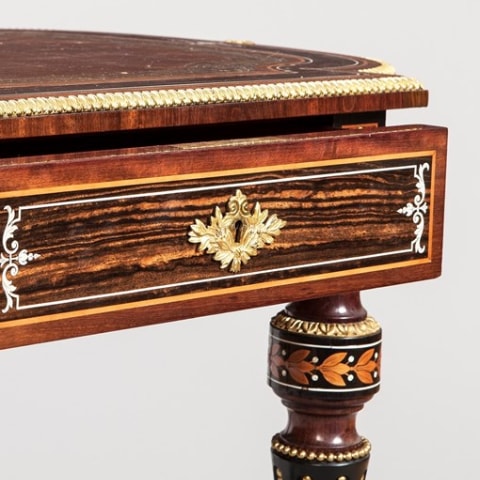
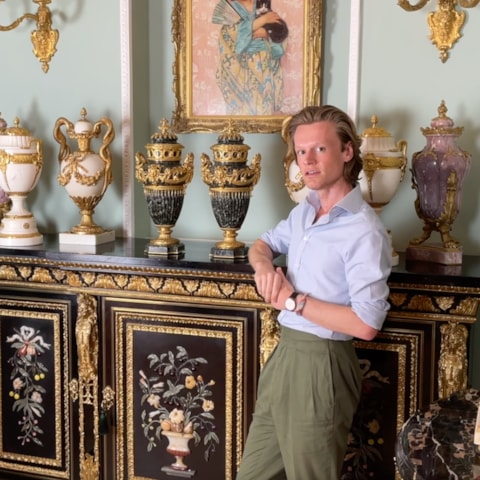
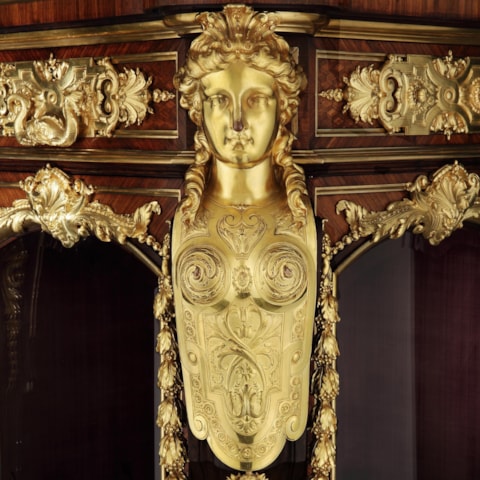
















A Large & Exquisite Florentine Pietra Dura Table Top On a Giltwood Base


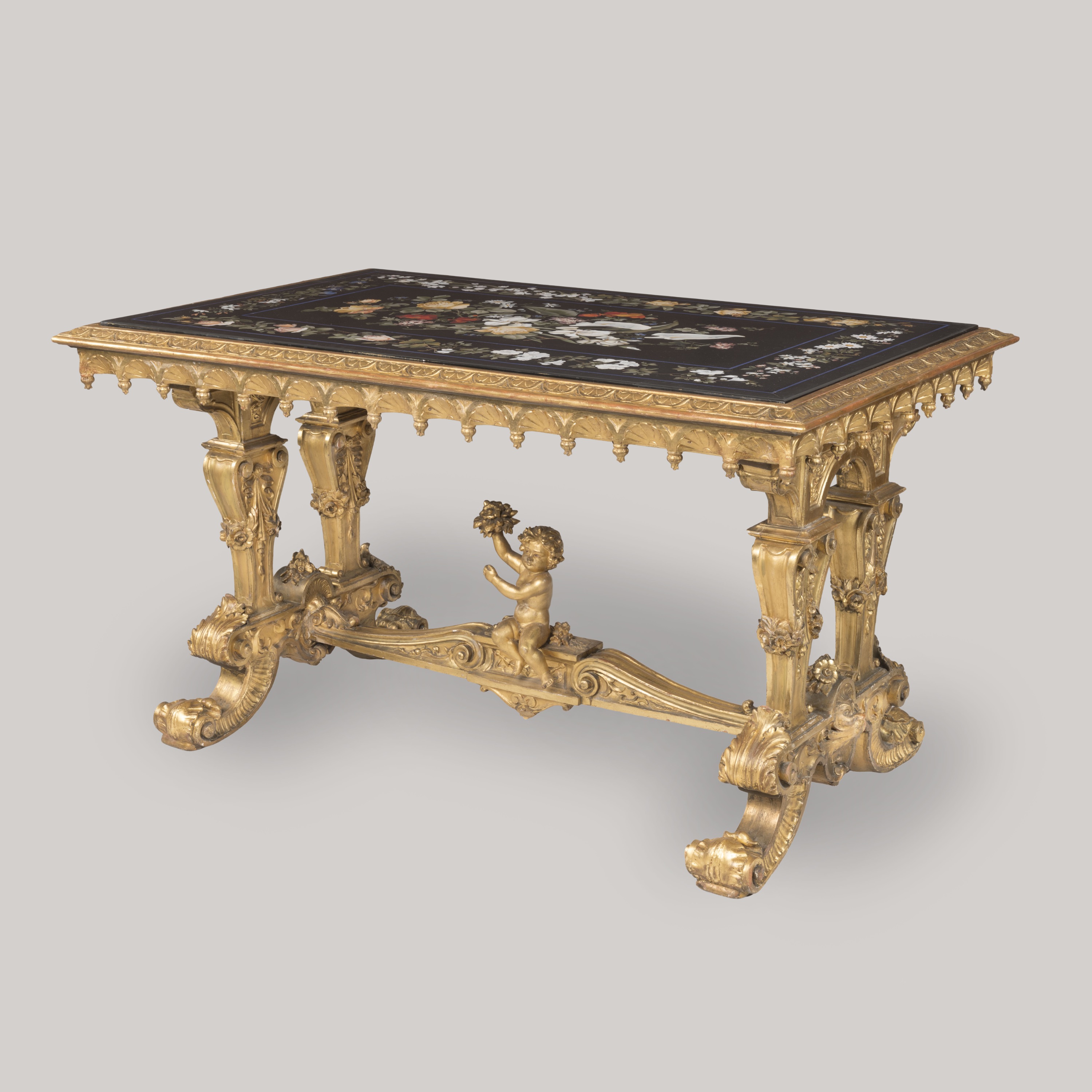


A Large & Exquisite Florentine Pietra Dura Table Top On a Giltwood Base
Dimensions: H: 33.5 in / 85.5 cm | W: 60.5 in / 153 cm | D: 38 in / 96.5 cm
PRICE: £95,000

A Large & Exquisite Florentine Pietra Dura Table Top
On a Giltwood Base
The Top Attributed to Gaetano Bianchini
The table top of rectangular shape, profusely inlaid with rare specimen stones on a black marble ground, depicting flowers among foliage including roses, jasmine, daisies, petunias, and peace lilies, within a conforming border of flowers in lapis lazuli stringing, the carved giltwood base with double-column end supports terminating in scrolled feet, joined by a stretcher with a seated putto.
Italian, circa 1870
A comparable pietra dura table top attributed to Gaetano Bianchini, on a different base, sold from the Freddie Mercury collection, Sotheby's London 6 Sep 2023, lot 2 (£114,300 GBP / $141,600 USD).
The art of inlaid marbles and hardstones, known as commesso di pietre dure, flourished in Florence under the patronage of the grand-ducal workshops, established in 1588, where the craft achieved unparalleled heights. By the early 19th century, however, production and innovation in this exquisite tradition had waned. It was through the efforts of enterprising private artists, such as Gaetano Bianchini, that this art form was revitalized and given a new lease of life.
Trained at the prestigious Opificio delle Pietre Dure, Bianchini reimagined the possibilities of this technique. By incorporating softer stones and alternative materials, he expanded the chromatic range and artistic potential of pietre dure, while reducing production time. This innovation enabled him to establish a successful private workshop around 1825, making the art more commercially viable. By 1840, the fame of the Laboratorio Bianchini had spread widely, even attracting a visit from Emperor Nicholas I of Russia, who offered Bianchini the directorship of the Imperial Lapidary Works at Peterhof. Bianchini declined, instead proposing to train Russian apprentices in Florentine mosaic techniques, thereby extending the reach of this artistry to Russia, where exceptional works were subsequently created.
Bianchini's renown became truly international. He received numerous accolades, including election as professor at the National Academy in France, a gold medal from the Imperial Academy of St. Petersburg, and the Medal of Industrial Merit from the Tuscan government. His works were celebrated at major exhibitions, from the Great Exhibition of 1851 in London to the Universal Exhibition of 1867 in Paris, securing his legacy as a pivotal figure in the revival of this celebrated Florentine art. On Gaetano's death in 1866, the firm was taken over by his two sons, Telemaco and Antonio, and the business continued until 1884.
You may also like


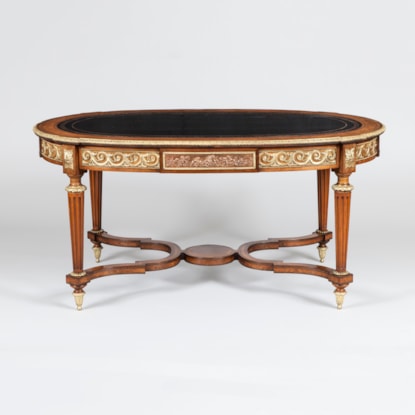
A Library Centre Table in the Louis XVI Manner
A Centre Table firmly attributed to François Linke
A Magnificent Library Table Attributed to Jackson & Graham
A George III Rectangular Breakfast Table

A Fine Louis XV Style Gilt-Bronze Mounted Centre Table By François Linke

An Austro-German Specimen Wood Centre Table of Exhibition quality
Recently viewed