Vip access

 Favourites


















Collection / Desks & Writing Furniture / Bureau Plats & Writing Tables
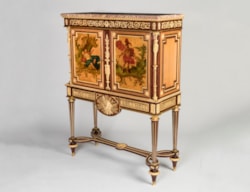
A Fine Ormolu-Mounted Bureau à Gradin by Maison Millet


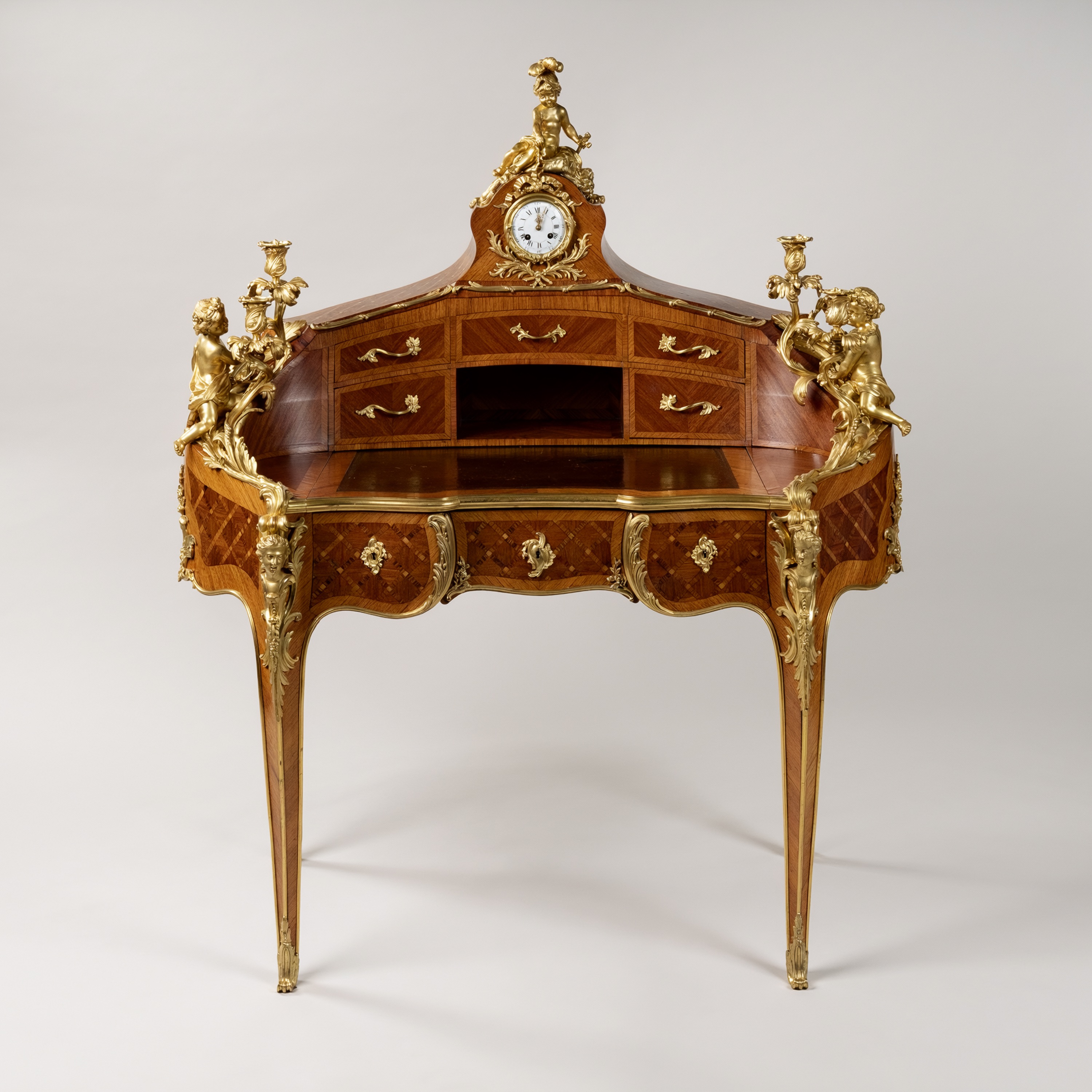


A Fine Ormolu-Mounted Bureau à Gradin by Maison Millet
Dimensions: H: 55 in / 139 cm | W: 45.5 in / 116 cm | D: 28.5 in / 72 cm

A Fine Ormolu-Mounted Bureau à Gradin
In the Louis XV Style
By Maison Millet of Paris
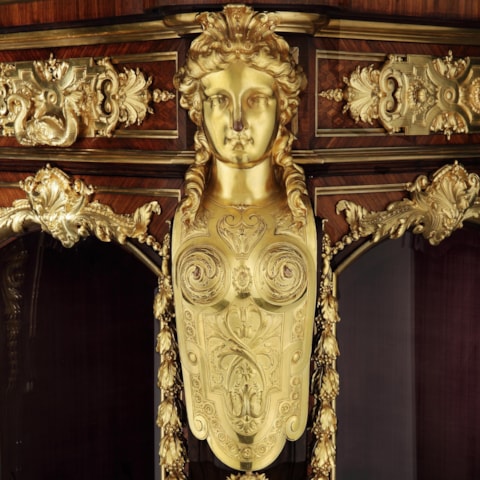
Constructed from bois satiné and inlaid with kingwood parquetry, designed in the Rococo style popular during the reign of Louis XV, with curved and bombé surfaces throughout beautifully embellished with cast, hand-chased fire gilt bronze mounts, the writing desk of so-called kidney form, standing on slender cabriole legs with foliate cast sabots and a pair of female espagnolettes adorning the front legs, the curved back and sides of the desks with panels of trellis parquetry and mounted with scrolled acanthus ormolu ornaments, repeated on the shaped frieze enclosing the lockable drawers below the leather pull-out writing slide, flanked by two ornate ormolu figural candelabra perched on the sides, the back having an arrangement of five drawers centred around a pigeon hole, below a clock face denoting the hours in Roman numerals and striking on the hours and half hours on a bell, surmounted by a herculean figure of a cherub wielding a sword, wearing a helmet and seated on a lion pelt, a subject referred to as the 'enfant guerier.' The reverse of some mounts marked 'MB' from the bronze master models.
French, circa 1890
Maison Millet exhibited a very similar Bureau à Gradin at the 1905 Paris Salon des industries du Mobilier.
The sculptural bronze mounts, particularly the recumbent cherubs and the 'infant warrior' figure are closely related to the designs of Leon Messagé who brought a new fluidity to the art of gilt bronze. An inkwell designed by Messagé, executed at the Barbedienne foundry, includes a similar motif of a helmeted cherub. The drawings for this design were published in 1890. Messagé is best known as the close collaborator of François Linke, though he also worked together with other cabinetmakers including Zwiener, Roux & Brunet, and perhaps Millet as suggested by this bureau.
Literature:
C. Mestdagh & P. Lécoules, L'Ameublement d'Art Français, 1850-1900, Les Editions de L'Amateur, (Paris), 2010, Fig. 244, p. 212, illustrating a less elaborate version by Millet.
C. Payne, Paris Furniture - the luxury market of the 19th century, Éditions Monelle Hayot (Paris), 2018; p. 470, illustrating the model.
You may also like


A Porcelain mounted Bureau Plat in the Manner of Edward Holmes Baldock

A Fine Writing Table in the Manner of Gillows of Lancaster
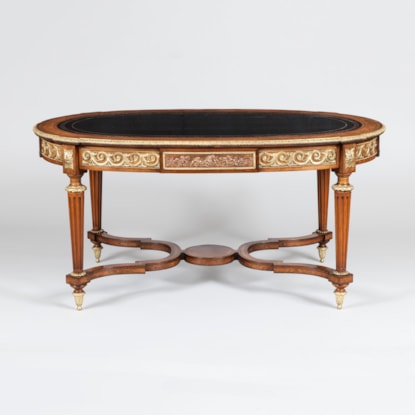
A Library Centre Table in the Louis XVI Manner

A Fine Bureau Plat in the Manner of André-Charles Boulle

A Royal Table Made by Morel & Seddon for Windsor Castle

A Pair of Tables Firmly Attributed to Donald Ross
Recently viewed