Vip access

 Favourites


















December 2025
Linke vs. Gillow: The 19th-Century Decorative Arms Race Between London and Paris

The Decorative Arms Race:
How Linke and Gillow Battled for the Future of Luxury Furniture
In the late 19th century, the world's leading furniture makers engaged in a fierce "decorative arms race" that would determine the future of luxury design. On one side stood François Linke, a Bohemian immigrant who sought to fuse the opulence of 18th-century French Rococo with the flowing, organic forms of Art Nouveau. On the other, the mighty British firm of Gillow & Co representing the industrial might and imperial nostalgia of the Victorian era. The battlefield was the Paris Exposition Universelle of 1900, where these two giants clashed for the patronage of the world's wealthiest collectors and tastemakers. Linke's audacious "Grand Bureau" desk, with its cascading bronze mounts sculpted by the virtuoso Léon Messagé, won the coveted Gold Medal and cemented his reputation as the master of a new French decorative style. But Gillow's imposing "Old English" furniture, grounded in the finest mahogany and faithful to the Georgian era, proved a more commercially successful strategy, furnishing the great hotels and ocean liners of the Edwardian age. This clash of artistic visions and business models laid bare the fundamental differences between French and British approaches to luxury furniture. It was a battle that would shape the future of the decorative arts on both sides of the Channel, with lasting implications for collectors, interior designers, and anyone seeking to understand the golden age of antique furniture.
The Paris Exposition Universelle of 1900: The Battlefield of Styles
The 1900 Paris Exposition was not merely a trade fair; it was the geopolitical and artistic arena where the "arms race" between London and Paris reached its zenith. While the world focused on the Eiffel Tower and the new Métro, a quieter but vicious battle was being fought in the Esplanade des Invalides, where the furniture exhibits were displayed.
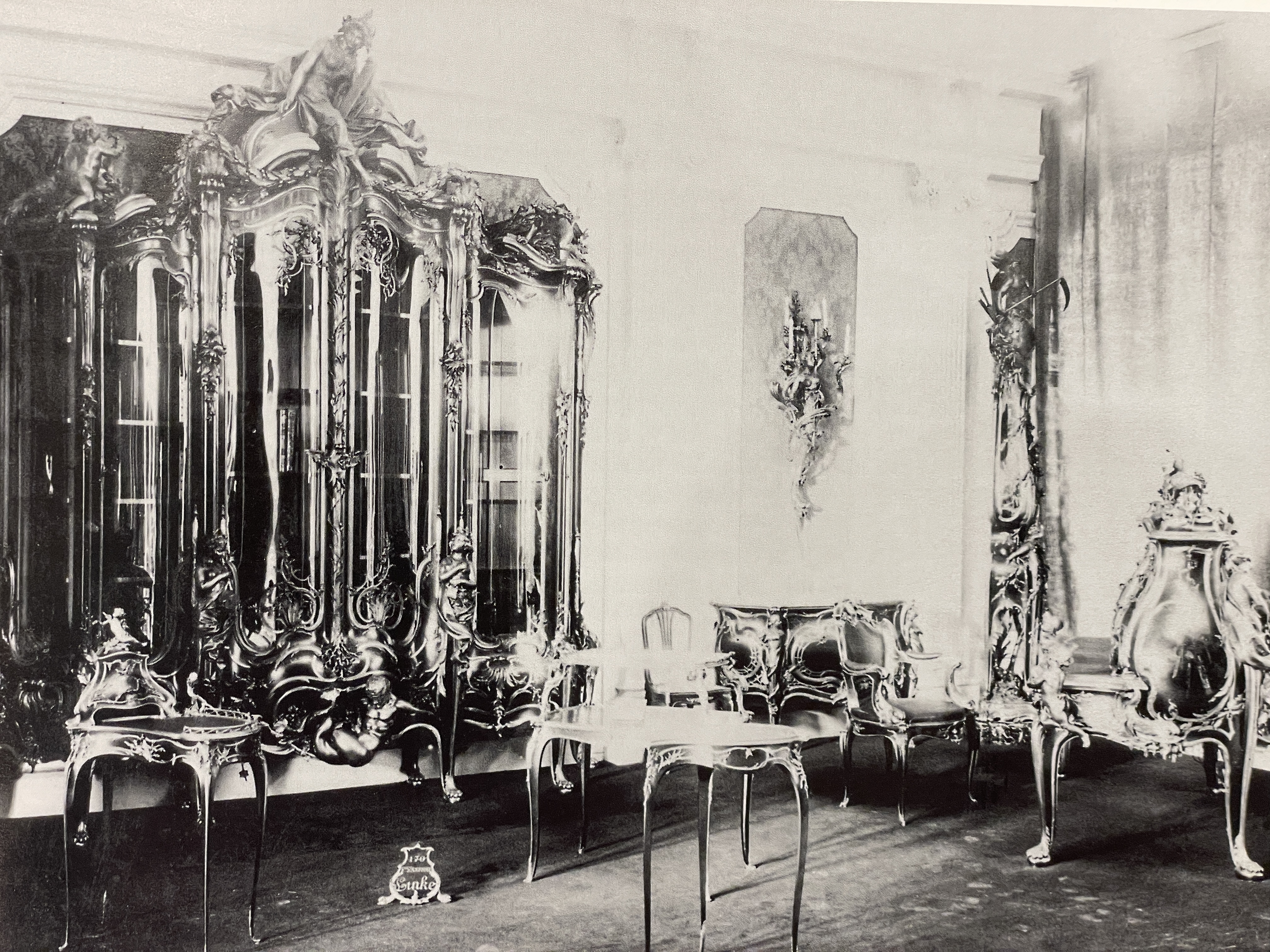
François Linke's display at the Paris Exposition Universelle of 1900
The French Strategy: Linke's "All-In" Gamble
By 1900, the French furniture trade was criticized for being stagnant, relying too heavily on endless reproductions of Louis XV and XVI antiques. François Linke, a Bohemian immigrant, realized that to win, he had to break the cycle of pure reproduction. Mortgaging his workshop and risking total bankruptcy, Linke created an entirely new form: the "Grand Bureau," a reimagining of the famous Bureau du Roi (King's Desk) at Versailles, but updated with the fluidity of Art Nouveau. Veneered in kingwood and satinwood, the defining feature was the ormolu (gilt-bronze) mounts sculpted by Léon Messagé, which appeared to drip over the edges and integrate structurally into the wood.
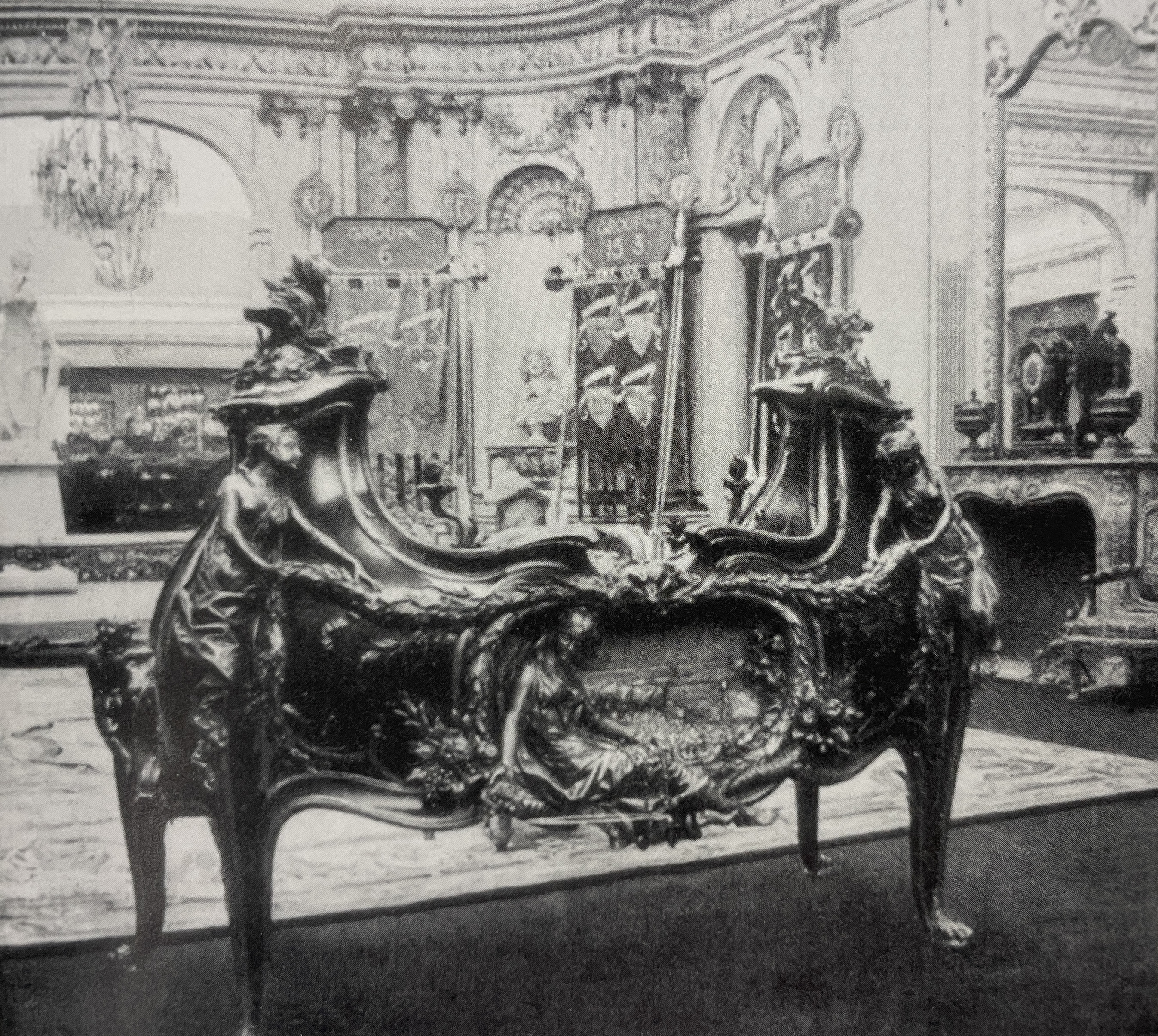
François Linke's Grand Bureau, first unveiled at the 1900 exposition, showcasing the innovative bronze designs of Messagé
The British Strategy: Gillow's Imperial Nostalgia
While Linke was inventing a new style, Gillow (operating as part of a loose consortium with S.J. Waring, soon to be Waring & Gillow) adopted a strategy of "aggressive traditionalism." Their goal was not to invent, but to assert British cultural dominance through history. In the British Pavilion, designed by the famous architect Edwin Lutyens, Gillow furnished it to look like an authentic English country house, displaying "Elizabethan" and "Jacobean" dining suites and a "Sheraton Revival" satinwood bedroom. This was a marketing move to appeal to American millionaires who wanted to buy "instant ancestry," arguing that French furniture was "frivolous," while British furniture was "dignified."
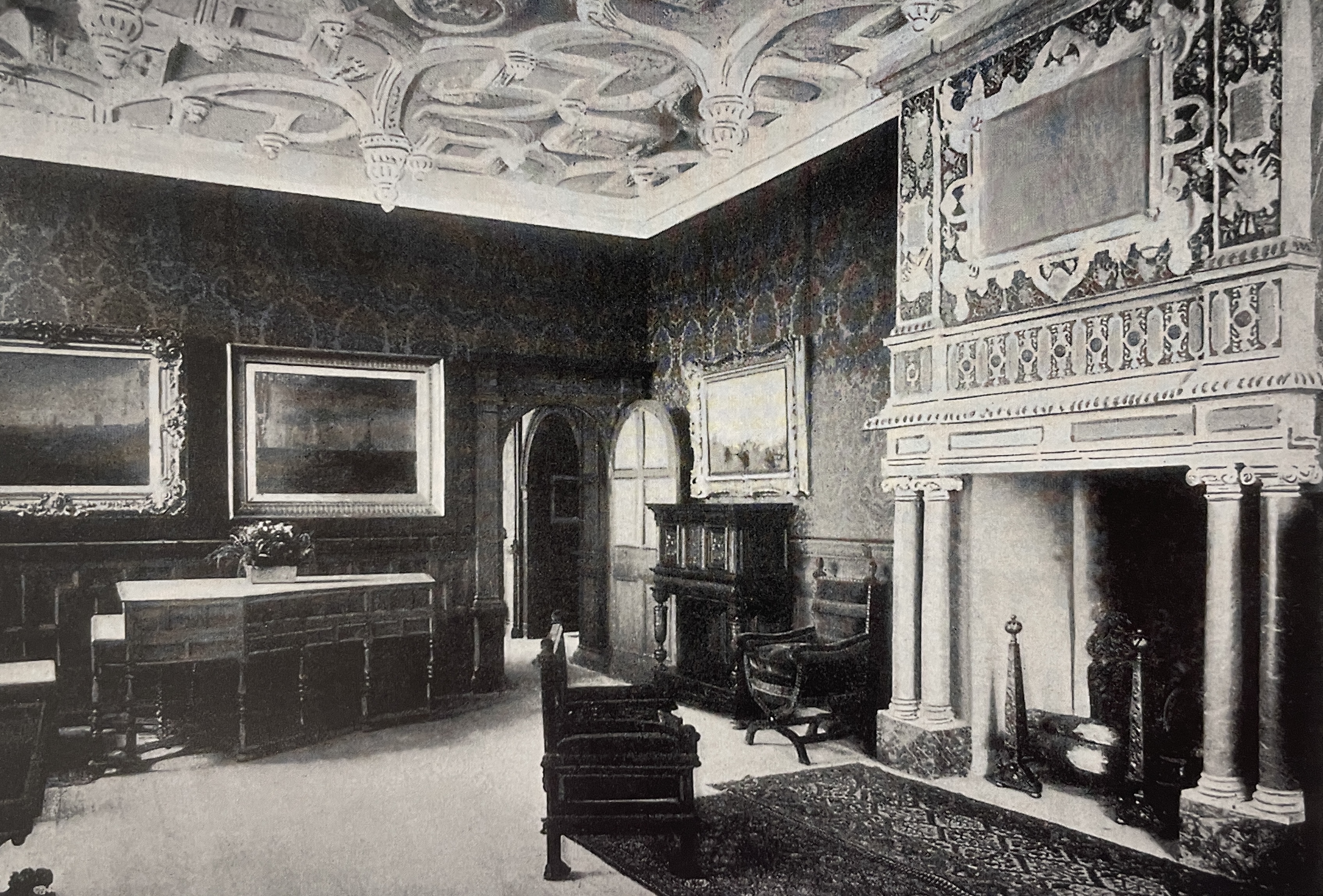
The British Pavilion at the 1900 exposition universelle, furnished by Gillows.
The "Arms Race" Dynamics at the Expo
The friction between the two approaches created a clear divide in the luxury market. Linke's philosophy was one of evolution, fusing Louis XV Rococo with Art Nouveau to create a "New French Style." His primary material was bronze, with the value lying in the sculpting and gilding of the mounts. Gillow, on the other hand, focused on the "Revival" of the "Golden Age" of English furniture (1750–1800), with the value lying in the selection of rare mahogany and the quality of the joinery. Linke's target buyer was the avant-garde millionaire (e.g., Elias Meyer, King of Egypt) who wanted unique art, while Gillow aimed for the industrial tycoon (e.g., the Vanderbilts) who wanted a "stately home" aesthetic. The jury at the Exposition awarded Linke the coveted Gold Medal, hailing him as the bridge between the 18th and 20th centuries and saving French furniture from becoming a "dead art." However, Gillow won the commercial war, with their display leading to massive contracts to furnish hotels and ocean liners, proving that "British Comfort" was a more scalable export than "French Art."
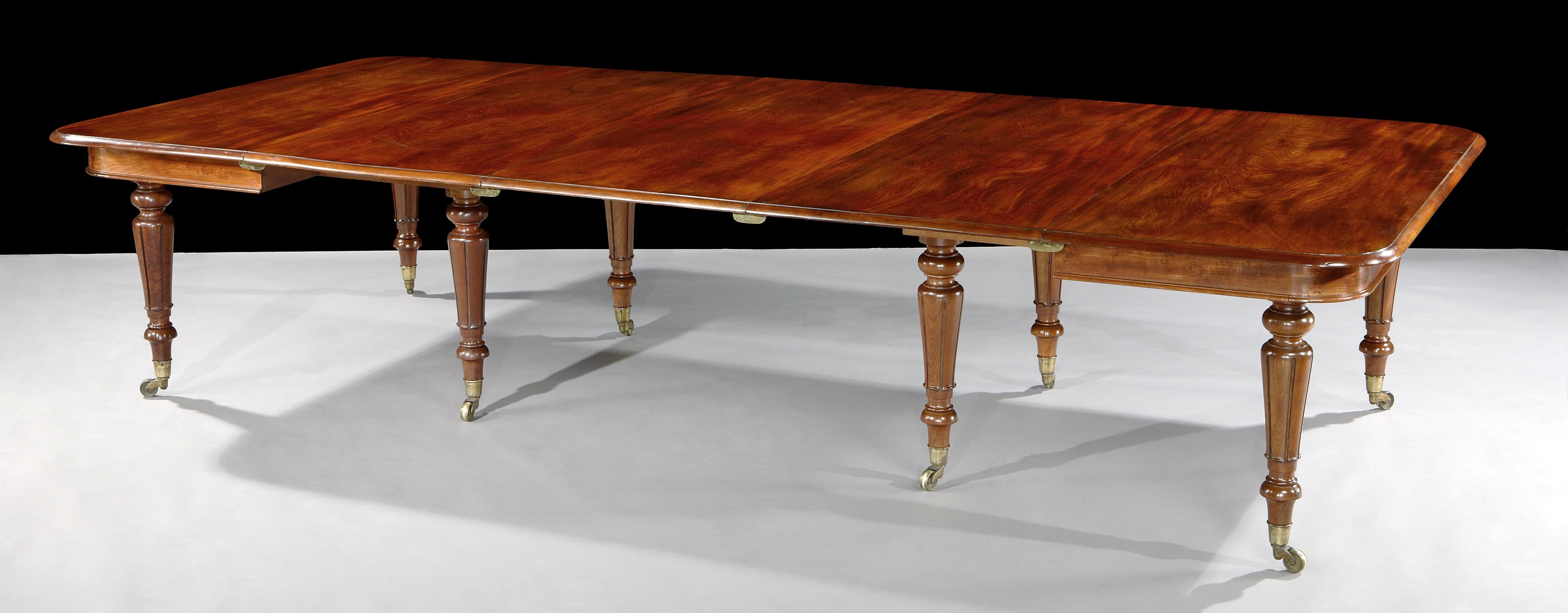
Antique dining room table by Gillows, previously with Butchoff Antiques. These so-called 'imperial' extending tables were a staple of Gillows offering for well over a century.
Léon Messagé (1842–1901):
The Sculptor Behind the "Linke Style"
While François Linke was the entrepreneur and master ébéniste (cabinetmaker), the aesthetic weapon that allowed him to outmaneuver both his Paris rivals and the British heavyweights like Gillow was a relatively obscure sculptor named Léon Messagé. In the context of the "Decorative Arms Race," Messagé was Linke's "secret weapon." The Role of the "Designer-Sculptor" vs. The "Draftsman" To understand Messagé's competitive advantage, one must contrast the design philosophies of London and Paris at this time. The British approach, exemplified by Gillow, was architectural, with furniture drawn by draftsmen who prioritized proportion, straight lines, and historical accuracy. Decoration was applied to the structure. In contrast, the French approach, embodied by Linke and Messagé, was sculptural. Messagé designed furniture as if it were a work of art, with the signature "liquid" aesthetic of gilt-bronze (ormolu) mounts that appeared to be poured over the wood, dripping down the legs and swirling around the marquetry. This daring asymmetry, a hallmark of the Rococo, was pushed to an extreme that flirted with Art Nouveau.
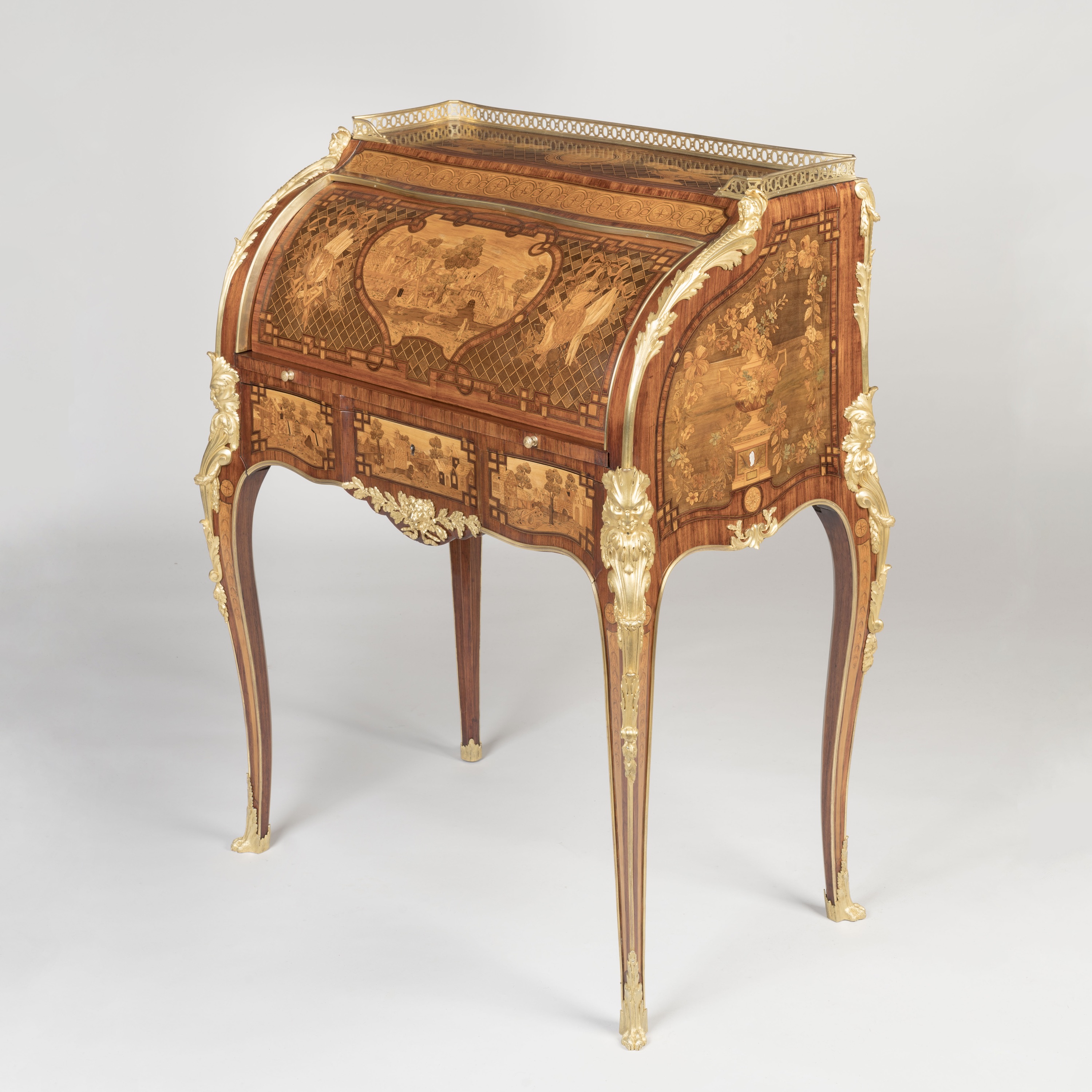
A Louis XV Style bureau à cylindre, attributed to Maison Kriéger of Paris, previously with Butchoff Antiques. Furniture in revival styles such as this were exhibited by French makers, including Paul Sormani and François Linke.
The Evolution of the Partnership (1890–1900)
Messagé did not start with Linke; his trajectory highlights the intense competition for talent within the Paris trade. Before 1893, he worked for Joseph-Emmanuel Zwiener, another German-born Parisian master, and the famous Bureau du Roi copy that Zwiener exhibited at the 1889 Exposition Universelle featured early Messagé mounts. When Zwiener returned to Germany, Linke astutely secured Messagé's services, essentially buying the "brain" behind the most advanced designs in Paris. Messagé's designs were notoriously difficult and expensive to produce, with high-relief bronze mounts, intricate figures integrated into the structure, and the use of mercurial gilding, a dangerous and costly process that created a rich, deep gold tone.
The "Cahier des Dessins" (The Book of Designs)
In 1890, Messagé published a book of designs titled Cahier des Dessins et Croquis Style Louis XV, which became a "Bible" for the Art Nouveau/Rococo fusion. However, only Linke had the rights to the actual maquettes (the 3D wax models) required to reproduce them perfectly. Gillow's response was to own copies of the book, but without the master models, they could only produce pale imitations, as the "soul" of the curve was lost in translation when English woodcarvers tried to replicate Messagé's French bronze fluidity.
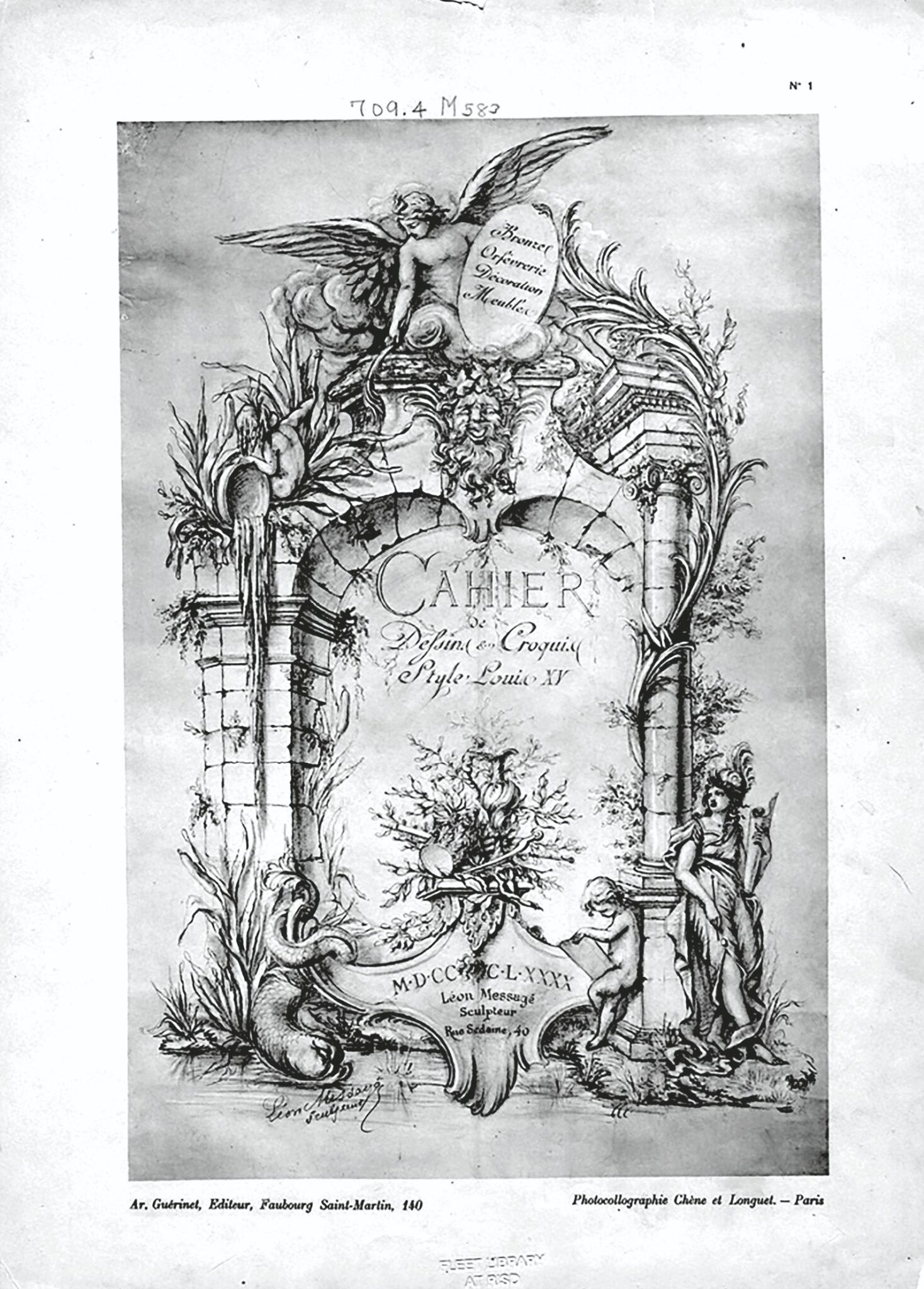
Frontispiece of Léon Messagé's 'Cahier des dessins'
Economic Impact on the Rivalry
Messagé's involvement forced Linke into a high-risk, high-reward economic model. A single Linke/Messagé cabinet could take 2 years to make, while in the same time, Gillow's factory in Lancaster could produce 50 high-quality mahogany dining suites. This solidified the market segmentation: Gillow took the volume luxury market (hotels, upper-middle-class homes), while Linke took the ultra-elite collector market (Kings, Tsars, and the absolute wealthiest industrialists).
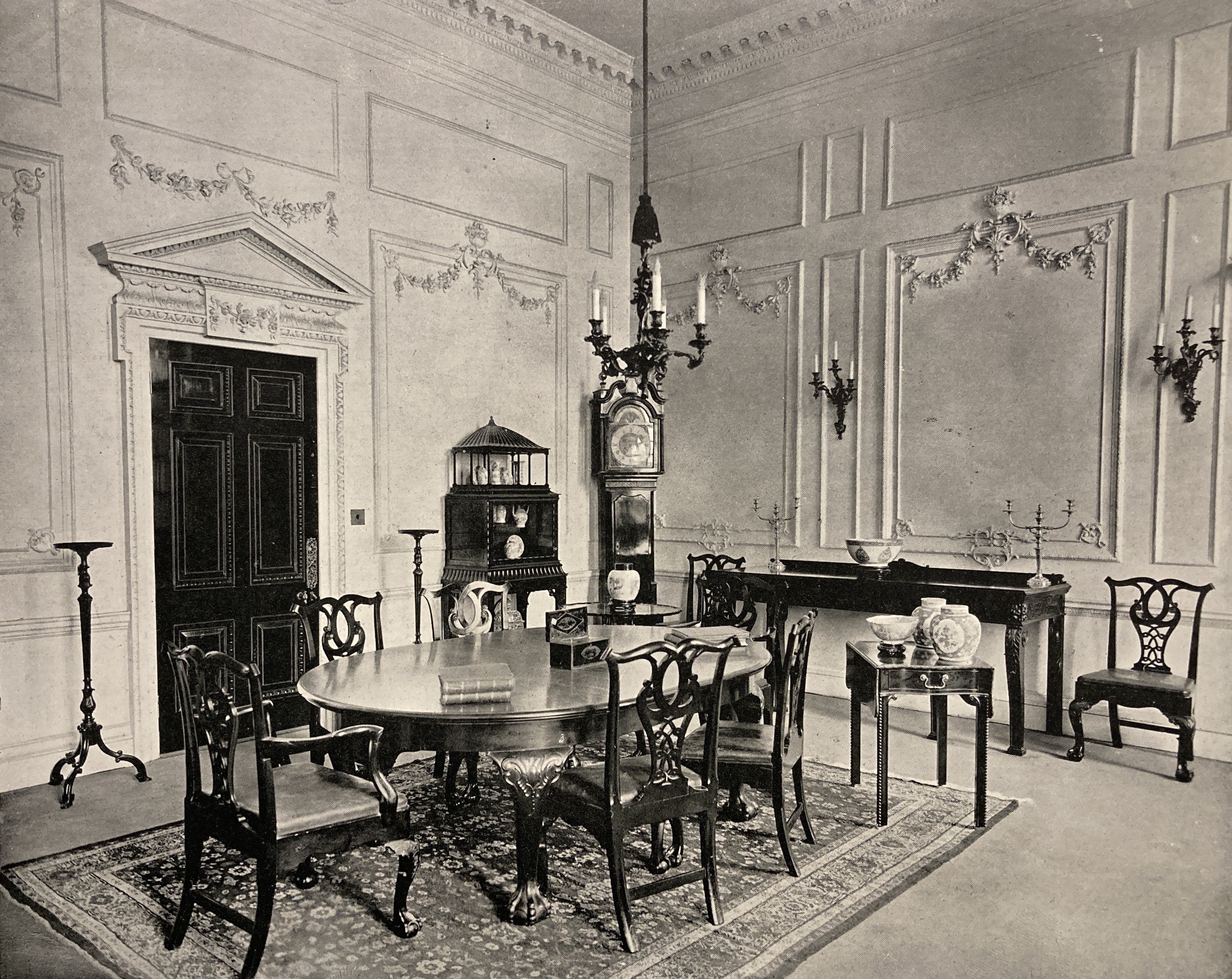
A room furnished by Waring & Gillow at the 1904 Saint Louis World's Fair, where they continued their strategy of exporting 'instant ancestry' to an American clientele.
The "Waring & Gillow" Consolidation (1897–1903):
The Industrialization of Luxury
If François Linke represented the pinnacle of individual genius in the decorative arms race, the consolidation of Gillow & Co. with S.J. Waring & Sons represented the triumph of corporate imperialism.
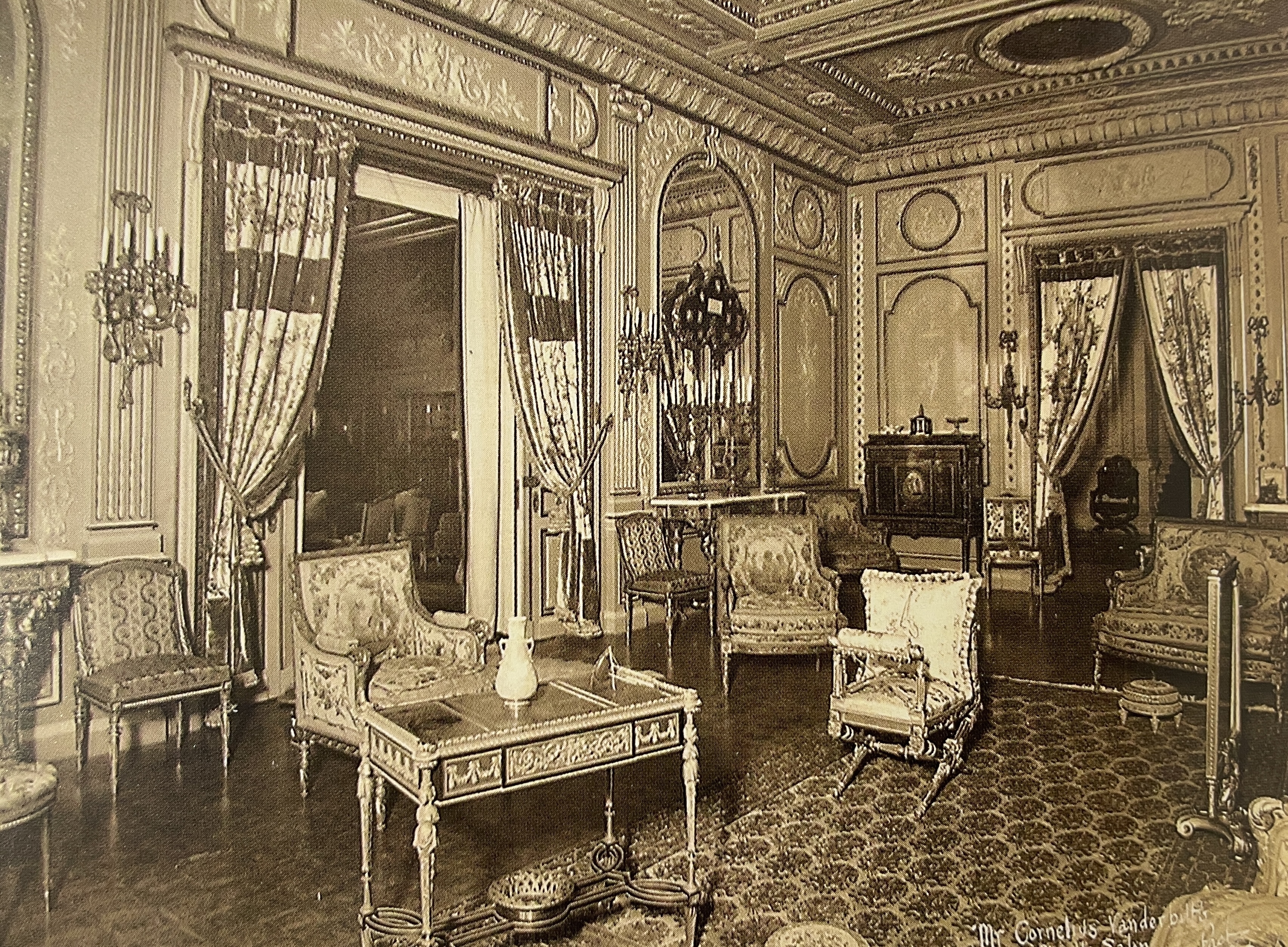
The home of Cornelius Vanderbilt, circa 1900, showcasing the interior decorating scheme of the ultra-elite, who furnished with pieces supplied by top makers such as François Linke.
The Players and the Mismatch
To understand the significance of this merger, one must recognize the distinct identities of the two firms involved. Gillow & Co., founded in roughly 1730 in Lancaster, held a Royal Warrant and was synonymous with impeccable quality, "honest" construction, and understated Georgian elegance. However, they were financially conservative and relied on a shrinking base of landed gentry. In contrast, S.J. Waring & Sons, a Liverpool-based firm founded by the marketing genius Samuel James Waring, was a ruthlessly ambitious disruptor who understood that the future of luxury was not just in selling a chair, but in selling an entire lifestyle to the rising middle class and the new industrial elite.
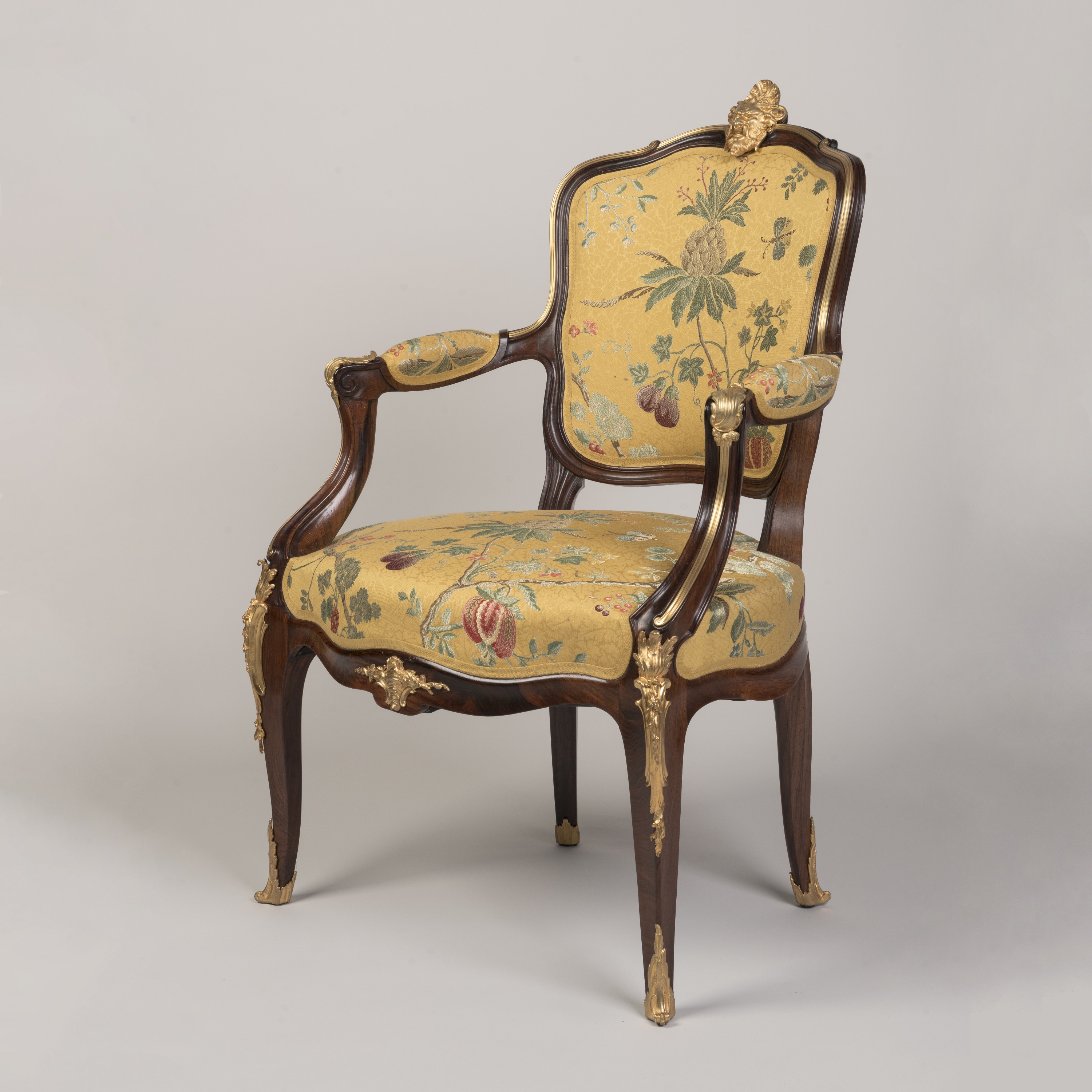
An armchair by François Linke, with Butchoff Antiques. Similar 'fauteuils de bureau' were exhibited by the maker at the 1900 exposition universelle in Paris.
The Strategy: "The General Motors of Furniture"
Around 1897, S.J. Waring began aggressively acquiring prestigious but struggling competitors (including Collinson & Lock and even Gillow itself), creating a vertically integrated furniture empire. The goal was to become the "General Motors of Furniture" - a one-stop-shop that could design, manufacture, and distribute luxury furnishings on an unprecedented scale.
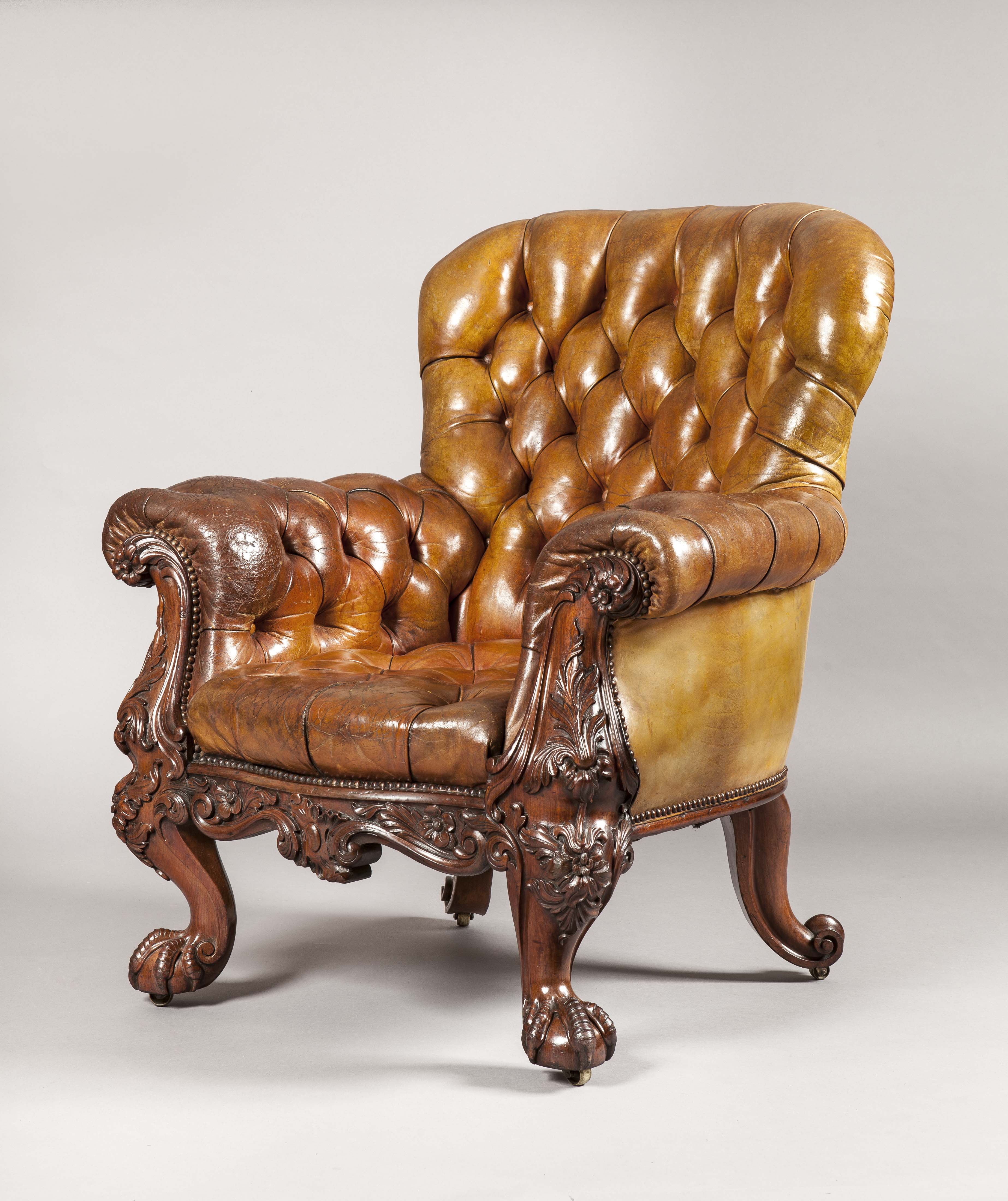
A carved mahogany armchair attributed to Gillows, and later retailed in Liverpool. Although this chair dates to around 1825, it exemplifies to aesthetic which continued under Waring & Gillow. Previously with Butchoff Antiques.
The Transformation of British Luxury
This consolidation transformed the British furniture trade from a collection of skilled workshops into a global industrial juggernaut capable of crushing French competition through sheer scale, logistics, and capital. Waring & Gillow's displays at the 1900 Paris Expo and subsequent contracts to furnish grand hotels and ocean liners proved that "British Comfort" was a more scalable export than "French Art." Linke's labor-intensive, boutique model, no matter how artistically innovative, could not match the efficiency and reach of the Waring & Gillow industrial machine.
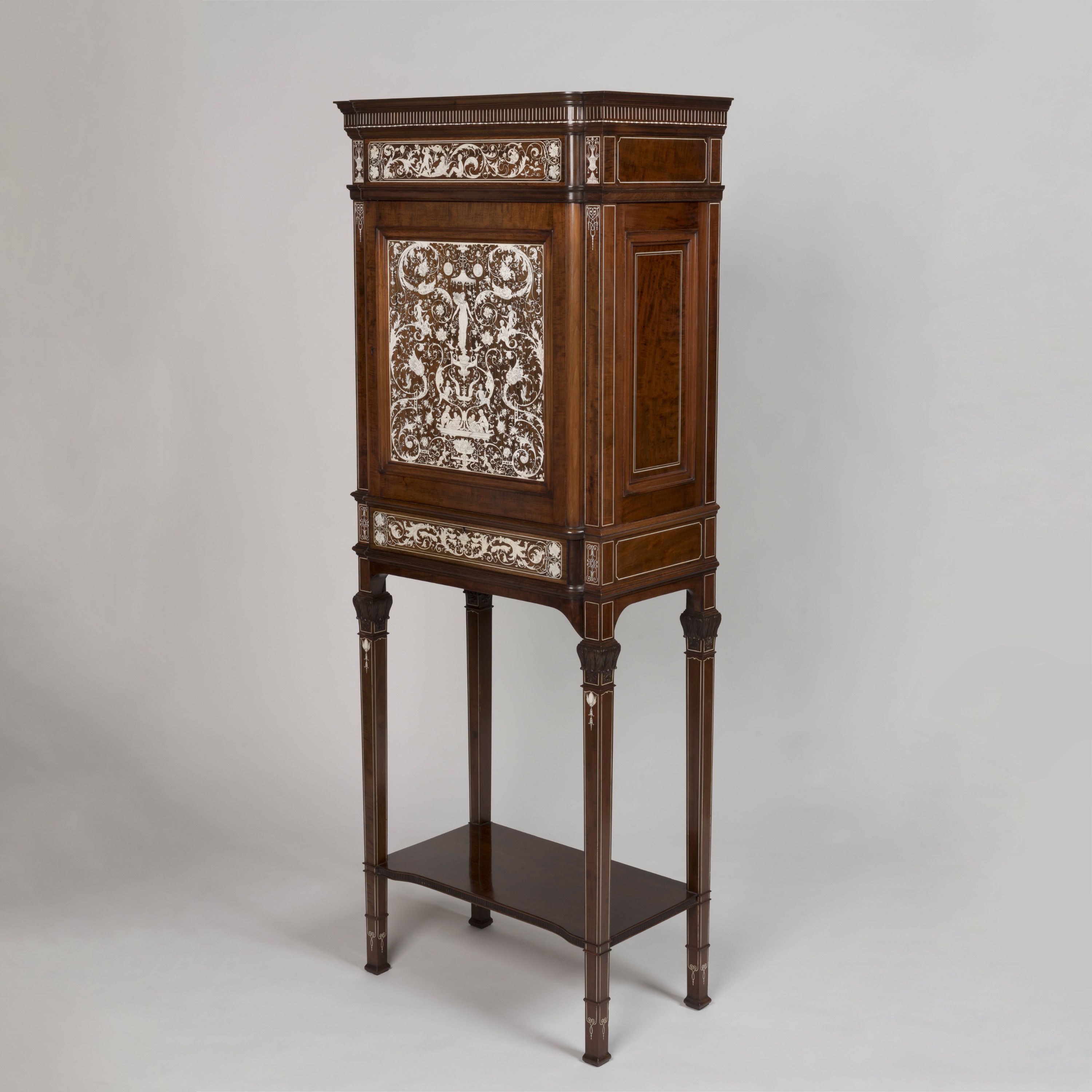
A cabinet by Collinson & Lock, another cabinetmaker who became part of the Waring & Gillow consolidated workshops, allowing for large projects, such as those at the UK Houses of Parliament, to be delivered and executed to a high standard.
Conclusion
The "decorative arms race" between Linke and Gillow at the 1900 Paris Exposition Universelle was a pivotal moment in the history of luxury furniture. It laid bare the fundamental differences between French and British approaches to design, craftsmanship, and business models. Linke's fusion of 18th-century Rococo and Art Nouveau, realized through the virtuosic bronzes of Léon Messagé, represented the pinnacle of individual artistic genius. But Gillow's strategy of reviving the "Golden Age" of English furniture, combined with the industrial might of the Waring & Gillow consolidation, proved the more commercially successful path, furnishing the grand hotels and ocean liners of the Edwardian era. This clash of visions continues to resonate today, informing the tastes and collecting habits of high-net-worth individuals, interior designers, and museum curators alike. Understanding the historical context and technical details of this "decorative arms race" is essential for anyone seeking to appreciate the enduring legacy of antique furniture and its role in shaping the modern world of luxury design.
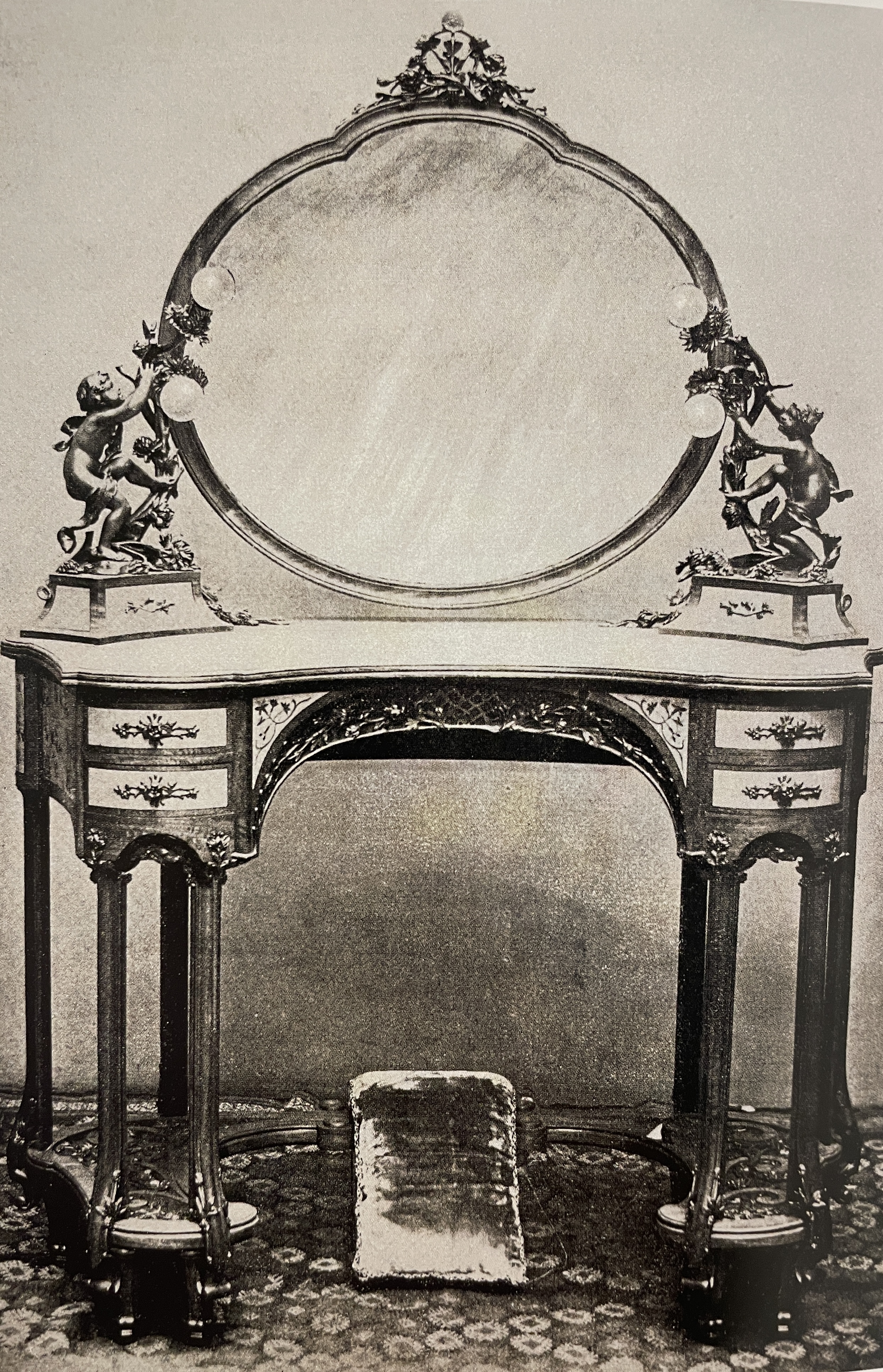
A Dressing Table shown by Millet of Paris at the 1900 exposition universelle, showing the influence of Art Nouveau and fluid ormolu mounts inspired by the work of Léon Messagé
Citations
[1] Sassoon, A. (2020). Linke: Ébéniste of the Élite. Antique Collecting Magazine. [2] Agius, P. (2016). Léon Messagé: The Sculptor Behind the Linke Style. Furniture History Society Newsletter. [3] Wainwright, C. (1989). The Architectural and Decorative Development of Furniture Making in England from the Restoration to the Victorian Era. Journal of the Furniture History Society. [4] Beevers, D. (2001). Gillow of Lancaster and London, 1730-1840. Antique Collecting Magazine.
Written by Rainier Schraepen
How Linke and Gillow Battled for the Future of Luxury Furniture
In the late 19th century, the world's leading furniture makers engaged in a fierce "decorative arms race" that would determine the future of luxury design. On one side stood François Linke, a Bohemian immigrant who sought to fuse the opulence of 18th-century French Rococo with the flowing, organic forms of Art Nouveau. On the other, the mighty British firm of Gillow & Co representing the industrial might and imperial nostalgia of the Victorian era. The battlefield was the Paris Exposition Universelle of 1900, where these two giants clashed for the patronage of the world's wealthiest collectors and tastemakers. Linke's audacious "Grand Bureau" desk, with its cascading bronze mounts sculpted by the virtuoso Léon Messagé, won the coveted Gold Medal and cemented his reputation as the master of a new French decorative style. But Gillow's imposing "Old English" furniture, grounded in the finest mahogany and faithful to the Georgian era, proved a more commercially successful strategy, furnishing the great hotels and ocean liners of the Edwardian age. This clash of artistic visions and business models laid bare the fundamental differences between French and British approaches to luxury furniture. It was a battle that would shape the future of the decorative arts on both sides of the Channel, with lasting implications for collectors, interior designers, and anyone seeking to understand the golden age of antique furniture.
The Paris Exposition Universelle of 1900: The Battlefield of Styles
The 1900 Paris Exposition was not merely a trade fair; it was the geopolitical and artistic arena where the "arms race" between London and Paris reached its zenith. While the world focused on the Eiffel Tower and the new Métro, a quieter but vicious battle was being fought in the Esplanade des Invalides, where the furniture exhibits were displayed.
François Linke's display at the Paris Exposition Universelle of 1900
The French Strategy: Linke's "All-In" Gamble
By 1900, the French furniture trade was criticized for being stagnant, relying too heavily on endless reproductions of Louis XV and XVI antiques. François Linke, a Bohemian immigrant, realized that to win, he had to break the cycle of pure reproduction. Mortgaging his workshop and risking total bankruptcy, Linke created an entirely new form: the "Grand Bureau," a reimagining of the famous Bureau du Roi (King's Desk) at Versailles, but updated with the fluidity of Art Nouveau. Veneered in kingwood and satinwood, the defining feature was the ormolu (gilt-bronze) mounts sculpted by Léon Messagé, which appeared to drip over the edges and integrate structurally into the wood.
François Linke's Grand Bureau, first unveiled at the 1900 exposition, showcasing the innovative bronze designs of Messagé
The British Strategy: Gillow's Imperial Nostalgia
While Linke was inventing a new style, Gillow (operating as part of a loose consortium with S.J. Waring, soon to be Waring & Gillow) adopted a strategy of "aggressive traditionalism." Their goal was not to invent, but to assert British cultural dominance through history. In the British Pavilion, designed by the famous architect Edwin Lutyens, Gillow furnished it to look like an authentic English country house, displaying "Elizabethan" and "Jacobean" dining suites and a "Sheraton Revival" satinwood bedroom. This was a marketing move to appeal to American millionaires who wanted to buy "instant ancestry," arguing that French furniture was "frivolous," while British furniture was "dignified."
The British Pavilion at the 1900 exposition universelle, furnished by Gillows.
The "Arms Race" Dynamics at the Expo
The friction between the two approaches created a clear divide in the luxury market. Linke's philosophy was one of evolution, fusing Louis XV Rococo with Art Nouveau to create a "New French Style." His primary material was bronze, with the value lying in the sculpting and gilding of the mounts. Gillow, on the other hand, focused on the "Revival" of the "Golden Age" of English furniture (1750–1800), with the value lying in the selection of rare mahogany and the quality of the joinery. Linke's target buyer was the avant-garde millionaire (e.g., Elias Meyer, King of Egypt) who wanted unique art, while Gillow aimed for the industrial tycoon (e.g., the Vanderbilts) who wanted a "stately home" aesthetic. The jury at the Exposition awarded Linke the coveted Gold Medal, hailing him as the bridge between the 18th and 20th centuries and saving French furniture from becoming a "dead art." However, Gillow won the commercial war, with their display leading to massive contracts to furnish hotels and ocean liners, proving that "British Comfort" was a more scalable export than "French Art."
Antique dining room table by Gillows, previously with Butchoff Antiques. These so-called 'imperial' extending tables were a staple of Gillows offering for well over a century.
Léon Messagé (1842–1901):
The Sculptor Behind the "Linke Style"
While François Linke was the entrepreneur and master ébéniste (cabinetmaker), the aesthetic weapon that allowed him to outmaneuver both his Paris rivals and the British heavyweights like Gillow was a relatively obscure sculptor named Léon Messagé. In the context of the "Decorative Arms Race," Messagé was Linke's "secret weapon." The Role of the "Designer-Sculptor" vs. The "Draftsman" To understand Messagé's competitive advantage, one must contrast the design philosophies of London and Paris at this time. The British approach, exemplified by Gillow, was architectural, with furniture drawn by draftsmen who prioritized proportion, straight lines, and historical accuracy. Decoration was applied to the structure. In contrast, the French approach, embodied by Linke and Messagé, was sculptural. Messagé designed furniture as if it were a work of art, with the signature "liquid" aesthetic of gilt-bronze (ormolu) mounts that appeared to be poured over the wood, dripping down the legs and swirling around the marquetry. This daring asymmetry, a hallmark of the Rococo, was pushed to an extreme that flirted with Art Nouveau.
A Louis XV Style bureau à cylindre, attributed to Maison Kriéger of Paris, previously with Butchoff Antiques. Furniture in revival styles such as this were exhibited by French makers, including Paul Sormani and François Linke.
The Evolution of the Partnership (1890–1900)
Messagé did not start with Linke; his trajectory highlights the intense competition for talent within the Paris trade. Before 1893, he worked for Joseph-Emmanuel Zwiener, another German-born Parisian master, and the famous Bureau du Roi copy that Zwiener exhibited at the 1889 Exposition Universelle featured early Messagé mounts. When Zwiener returned to Germany, Linke astutely secured Messagé's services, essentially buying the "brain" behind the most advanced designs in Paris. Messagé's designs were notoriously difficult and expensive to produce, with high-relief bronze mounts, intricate figures integrated into the structure, and the use of mercurial gilding, a dangerous and costly process that created a rich, deep gold tone.
The "Cahier des Dessins" (The Book of Designs)
In 1890, Messagé published a book of designs titled Cahier des Dessins et Croquis Style Louis XV, which became a "Bible" for the Art Nouveau/Rococo fusion. However, only Linke had the rights to the actual maquettes (the 3D wax models) required to reproduce them perfectly. Gillow's response was to own copies of the book, but without the master models, they could only produce pale imitations, as the "soul" of the curve was lost in translation when English woodcarvers tried to replicate Messagé's French bronze fluidity.
Frontispiece of Léon Messagé's 'Cahier des dessins'
Economic Impact on the Rivalry
Messagé's involvement forced Linke into a high-risk, high-reward economic model. A single Linke/Messagé cabinet could take 2 years to make, while in the same time, Gillow's factory in Lancaster could produce 50 high-quality mahogany dining suites. This solidified the market segmentation: Gillow took the volume luxury market (hotels, upper-middle-class homes), while Linke took the ultra-elite collector market (Kings, Tsars, and the absolute wealthiest industrialists).
A room furnished by Waring & Gillow at the 1904 Saint Louis World's Fair, where they continued their strategy of exporting 'instant ancestry' to an American clientele.
The "Waring & Gillow" Consolidation (1897–1903):
The Industrialization of Luxury
If François Linke represented the pinnacle of individual genius in the decorative arms race, the consolidation of Gillow & Co. with S.J. Waring & Sons represented the triumph of corporate imperialism.
The home of Cornelius Vanderbilt, circa 1900, showcasing the interior decorating scheme of the ultra-elite, who furnished with pieces supplied by top makers such as François Linke.
The Players and the Mismatch
To understand the significance of this merger, one must recognize the distinct identities of the two firms involved. Gillow & Co., founded in roughly 1730 in Lancaster, held a Royal Warrant and was synonymous with impeccable quality, "honest" construction, and understated Georgian elegance. However, they were financially conservative and relied on a shrinking base of landed gentry. In contrast, S.J. Waring & Sons, a Liverpool-based firm founded by the marketing genius Samuel James Waring, was a ruthlessly ambitious disruptor who understood that the future of luxury was not just in selling a chair, but in selling an entire lifestyle to the rising middle class and the new industrial elite.
An armchair by François Linke, with Butchoff Antiques. Similar 'fauteuils de bureau' were exhibited by the maker at the 1900 exposition universelle in Paris.
The Strategy: "The General Motors of Furniture"
Around 1897, S.J. Waring began aggressively acquiring prestigious but struggling competitors (including Collinson & Lock and even Gillow itself), creating a vertically integrated furniture empire. The goal was to become the "General Motors of Furniture" - a one-stop-shop that could design, manufacture, and distribute luxury furnishings on an unprecedented scale.
A carved mahogany armchair attributed to Gillows, and later retailed in Liverpool. Although this chair dates to around 1825, it exemplifies to aesthetic which continued under Waring & Gillow. Previously with Butchoff Antiques.
The Transformation of British Luxury
This consolidation transformed the British furniture trade from a collection of skilled workshops into a global industrial juggernaut capable of crushing French competition through sheer scale, logistics, and capital. Waring & Gillow's displays at the 1900 Paris Expo and subsequent contracts to furnish grand hotels and ocean liners proved that "British Comfort" was a more scalable export than "French Art." Linke's labor-intensive, boutique model, no matter how artistically innovative, could not match the efficiency and reach of the Waring & Gillow industrial machine.
A cabinet by Collinson & Lock, another cabinetmaker who became part of the Waring & Gillow consolidated workshops, allowing for large projects, such as those at the UK Houses of Parliament, to be delivered and executed to a high standard.
Conclusion
The "decorative arms race" between Linke and Gillow at the 1900 Paris Exposition Universelle was a pivotal moment in the history of luxury furniture. It laid bare the fundamental differences between French and British approaches to design, craftsmanship, and business models. Linke's fusion of 18th-century Rococo and Art Nouveau, realized through the virtuosic bronzes of Léon Messagé, represented the pinnacle of individual artistic genius. But Gillow's strategy of reviving the "Golden Age" of English furniture, combined with the industrial might of the Waring & Gillow consolidation, proved the more commercially successful path, furnishing the grand hotels and ocean liners of the Edwardian era. This clash of visions continues to resonate today, informing the tastes and collecting habits of high-net-worth individuals, interior designers, and museum curators alike. Understanding the historical context and technical details of this "decorative arms race" is essential for anyone seeking to appreciate the enduring legacy of antique furniture and its role in shaping the modern world of luxury design.
A Dressing Table shown by Millet of Paris at the 1900 exposition universelle, showing the influence of Art Nouveau and fluid ormolu mounts inspired by the work of Léon Messagé
Citations
[1] Sassoon, A. (2020). Linke: Ébéniste of the Élite. Antique Collecting Magazine. [2] Agius, P. (2016). Léon Messagé: The Sculptor Behind the Linke Style. Furniture History Society Newsletter. [3] Wainwright, C. (1989). The Architectural and Decorative Development of Furniture Making in England from the Restoration to the Victorian Era. Journal of the Furniture History Society. [4] Beevers, D. (2001). Gillow of Lancaster and London, 1730-1840. Antique Collecting Magazine.
Written by Rainier Schraepen